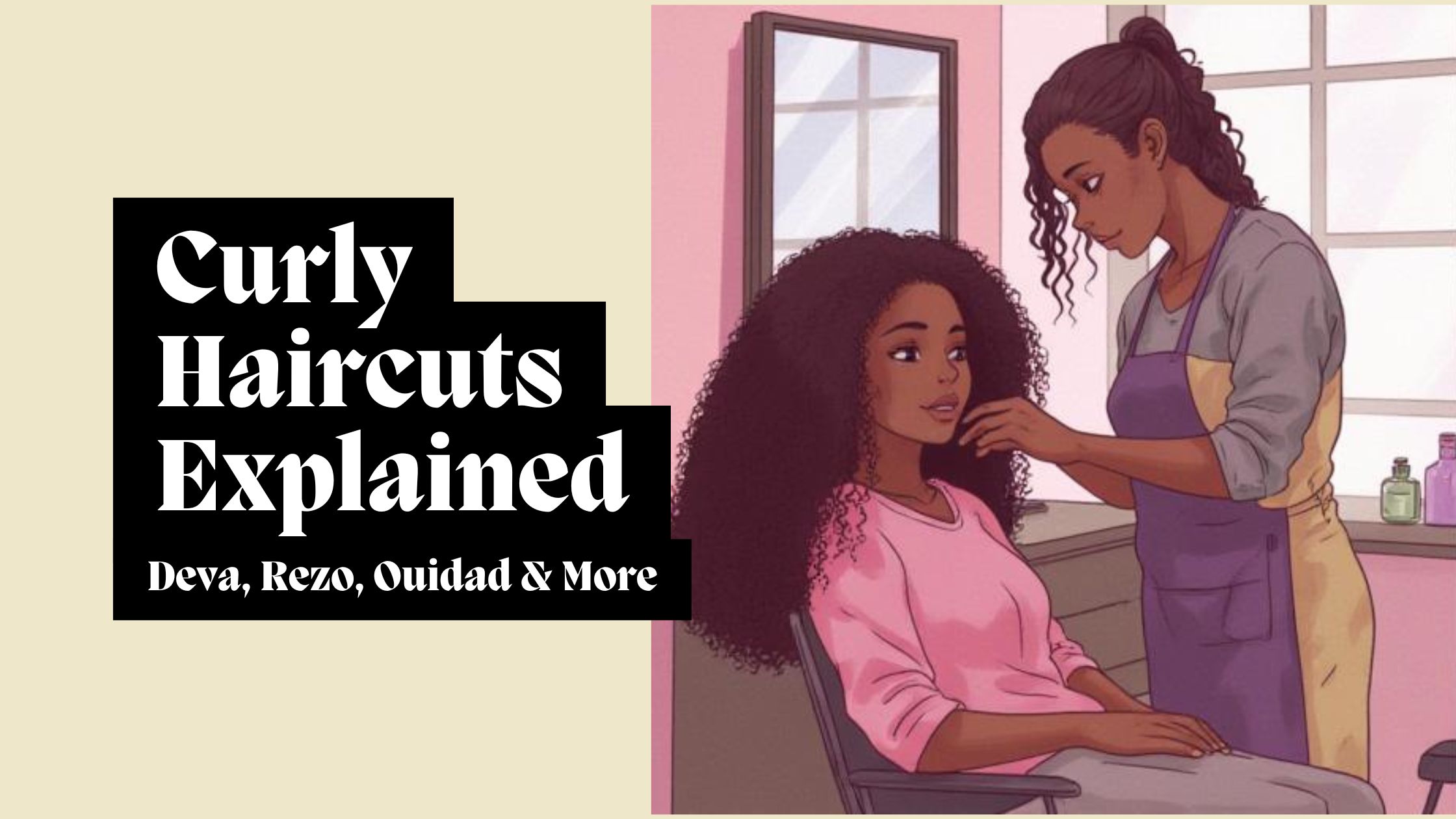
Curly Haircut Guide: Deva Cut vs. Rezo Cut, Ouidad Cut & More
Product images are sourced from the official brand websites or authorized retailer listings for identification purposes. This post may contain affiliate links, which means I may earn a small commission if you purchase them at no extra cost to you. All opinions are my own. See my full disclosure here.
Curly haircuts have come a long way, and with that has come a growing list of cutting techniques. Whether you’re researching your first curly haircut or simply trying to understand the differences between methods like the Deva Cut, Rezo Cut, and Ouidad Cut, it’s easy to feel overwhelmed by all the terminology.
The good news is that these haircut methods aren’t competing to be the “best.” Instead, each one was developed with a different approach to shaping curly hair. Understanding those differences can help you communicate your goals more clearly and choose a stylist whose cutting philosophy aligns with your needs.
In this guide, we’ll compare some of the most common curly haircut techniques, explain the difference between dry and wet cuts, and discuss what to look for before booking your next appointment. You can also watch the accompanying video below.
Why Are There So Many Curly Haircut Methods?
If you’ve ever searched for a curly haircut online, you’ve probably noticed that different salons often specialize in different cutting techniques. That can make it seem like every method is competing to be the “right” one.
In reality, most curly haircut methods were developed to solve different challenges. Some techniques focus on creating a specific shape, while others are designed to preserve length, remove bulk, or enhance movement throughout the hair.
Your individual hair characteristics also play a role. Factors such as curl pattern, hair density, strand thickness, shrinkage, and even your day-to-day styling routine can influence which cutting approach a stylist recommends.
Rather than focusing on finding the “best” curly haircut, think about the result you’re hoping to achieve. Understanding your goals and communicating them clearly to your stylist is often more important than choosing a specific haircut by name.
Dry Cuts vs. Wet Cuts
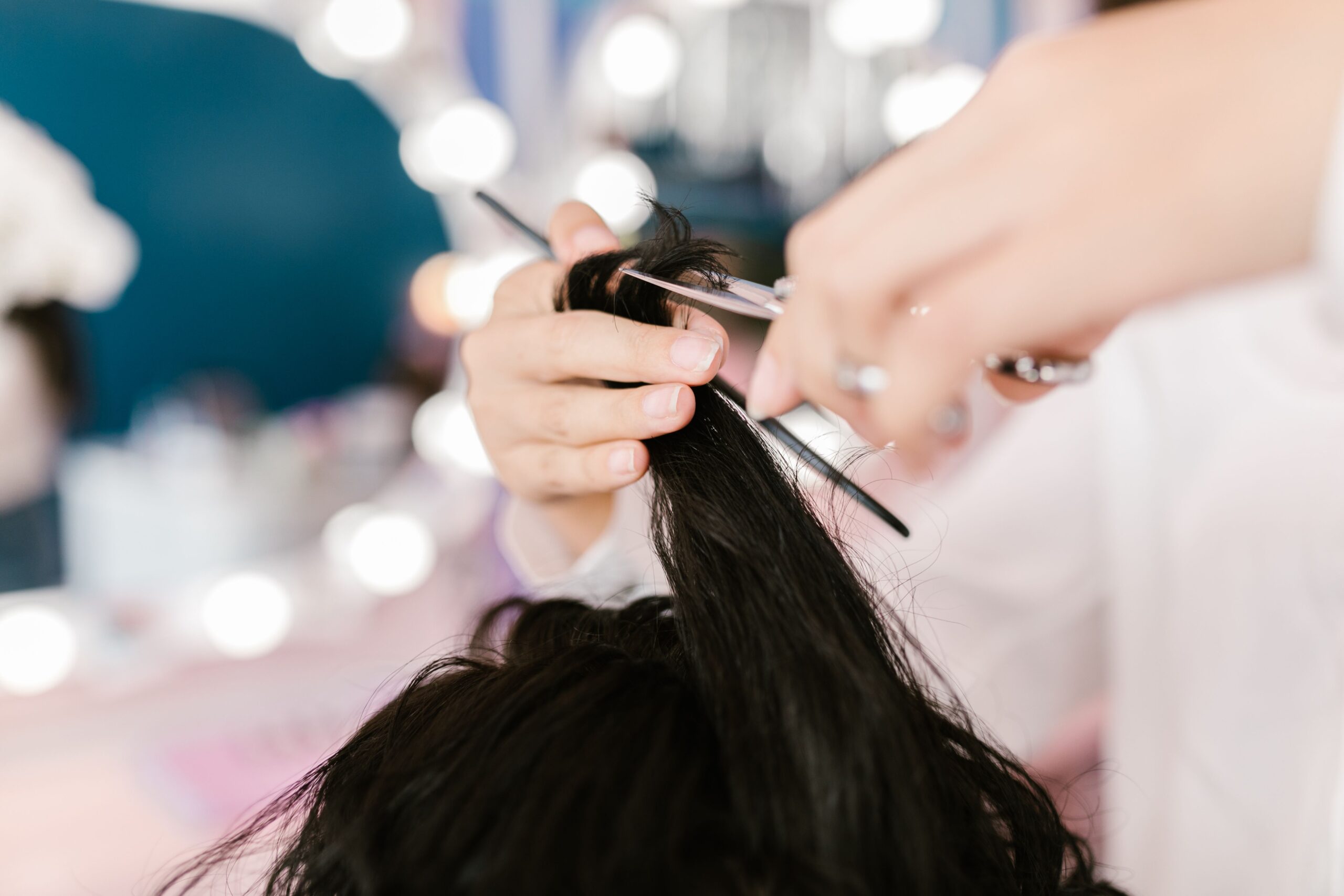
One of the biggest debates in the curly hair community is whether curls should be cut dry or wet. If you’ve been researching curly haircuts, you’ve probably noticed that some salons specialize in one approach over the other.
Dry cutting became much more widely recognized with the popularity of the Deva Cut, a cutting method we’ll talk about later, but dry and wet cutting each have their place.
With a dry cut, the stylist works with your hair in its natural state. Because the curls have already formed, they can see how each curl falls, how much it shrinks, and how the overall shape looks before making adjustments.
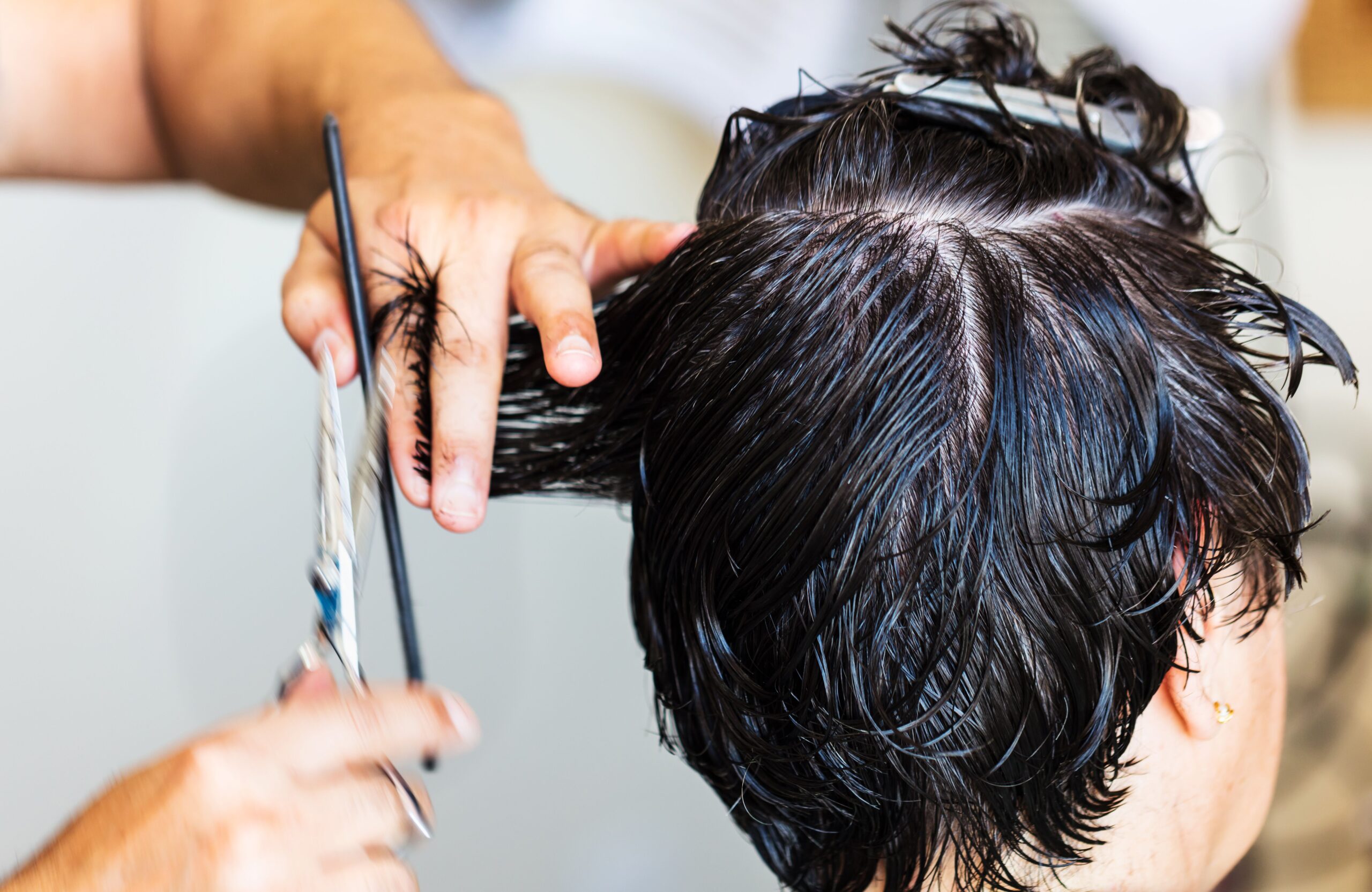
With a wet cut, the hair is cut while it’s damp or soaking wet, before the curls have fully formed. As the hair dries, it naturally shrinks, so the stylist relies on their experience and understanding of your curl pattern to predict the final result.
Neither approach is automatically better. They simply provide different information during the haircut. A dry cut allows the stylist to shape the hair based on how your curls naturally fall, while a wet cut can work just as well when the stylist understands your hair and how it behaves once it’s dry.
That’s why I wouldn’t choose a stylist based solely on whether they cut hair dry or wet. Their experience, training, and understanding of your hair are often just as important as the cutting method itself.
| Dry Cut | Wet Cut |
|---|---|
| Hair is cut dry | Hair is cut wet |
| Stylist sees natural curl pattern | Stylist predicts shrinkage |
| Often cut curl by curl | Often cut in sections |
| Easier to customize shape | Helpful for creating overall structure |
Popular Curly Haircut Methods
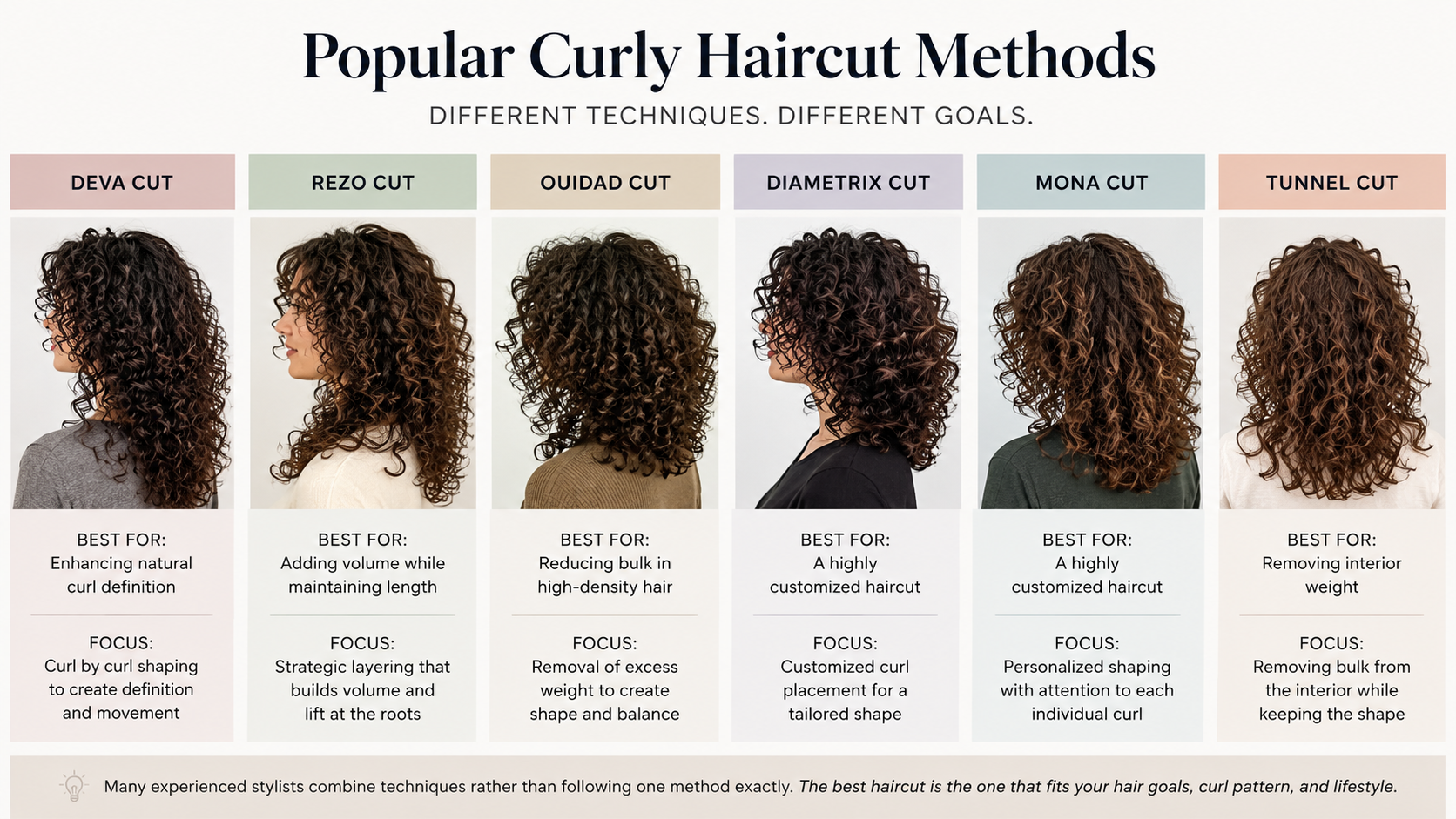
Deva Cut
The Deva Cut is one of the most well-known curly haircut techniques and helped popularize cutting curly hair in its natural state. It was developed by Lorraine Massey, co-founder of the original DevaChan Salon in New York City and author of Curly Girl: The Handbook. The technique was created around the idea that curls should be shaped based on how they naturally fall rather than how they look when they’re wet.
A traditional Deva Cut is performed on dry hair, with the stylist cutting each curl individually to create a customized shape. Because the hair is already dry, the stylist can see your curl pattern, shrinkage, and overall silhouette throughout the haircut. This approach can make it easier to tailor the final shape to your natural curls.
Best for
- Enhancing natural curl definition
- Creating a customized shape
- People who usually wear their hair naturally curly
- Clients who want to see the final shape during the haircut
Rezo Cut
The Rezo Cut was developed by Nubia Suárez, a hairstylist and educator known for creating a cutting technique that balances shape, volume, and movement while preserving the hair’s overall length. Like the Deva Cut, it’s typically performed on dry hair, but the cutting philosophy is different.
Rather than focusing only on shaping individual curls, the Rezo Cut is designed to create a balanced silhouette that allows the curls to move more freely while maintaining length. The technique aims to create harmony between the crown, sides, and perimeter of the hair, giving many clients the appearance of fuller, more evenly distributed volume.
As with any curly haircut, the final result depends on your curl pattern, hair density, and the stylist performing the service. Many stylists have adapted the Rezo philosophy or combine it with other cutting techniques to create a haircut tailored to each client.
Best for
- Maintaining overall length
- Creating balanced volume and movement
- Rounded, symmetrical shapes
- People who enjoy wearing their hair naturally curly
Ouidad Cut
The Ouidad Cut was developed by Ouidad, a hairstylist often referred to as the “Queen of Curl.” Unlike the Deva and Rezo Cuts, the Ouidad Cut is traditionally performed on wet hair and is based on the idea that strategically removing weight from inside the hair can improve its overall shape and movement.
One of the defining features of this technique is interior carving, in which the stylist removes bulk from within the hair rather than relying solely on traditional layers. This can help dense curls feel lighter and move more freely while maintaining the overall length and silhouette.
Because every head of curls is different, the amount of interior carving will vary depending on your hair’s density, texture, and styling goals. An experienced stylist will customize the haircut to remove enough weight without disrupting the natural curl pattern.
Best for
- Thick or high-density hair
- Reducing excess bulk
- Improving movement
- Clients who want to maintain their overall length while making dense hair feel lighter
Diametrix Cut
The Diametrix Cut was developed by Jonathan Torch, a hairstylist and educator who created a geometric approach to cutting curly hair. Rather than following a single haircut shape, the technique focuses on creating balance and proportion based on each person’s unique curl pattern, hair density, face shape, and styling preferences.
Like many modern curly haircut methods, the Diametrix Cut is intended to be highly customized. Stylists who train in this technique learn a specific cutting system but may also combine it with other methods depending on the client’s hair and goals.
Because the Diametrix Cut isn’t as widely offered as techniques like the Deva or Rezo Cut, you may need to search specifically for stylists who have received Diametrix training.
Best for
- Customized haircut shapes
- Balancing volume and proportion
- Clients looking for a personalized approach
- A variety of curl patterns and densities
Mona Cut
The Mona Cut was developed by Mona Baltazar, a curly hair specialist known for creating customized haircuts that work with each client’s natural curl pattern and lifestyle. Rather than following a one-size-fits-all formula, the Mona Cut focuses on creating a personalized shape based on factors such as curl pattern, density, shrinkage, and how the client typically wears their hair.
Like many modern curly haircut methods, the exact approach can vary depending on the stylist and the individual’s hair goals. The emphasis is on creating a haircut that complements the client’s natural curls while remaining easy to maintain between salon visits.
Best for
- Personalized haircut shapes
- Clients looking for a customized approach
- A variety of curl patterns and textures
- Everyday wear and manageable styling
Tunnel Cut
The Tunnel Cut is a less common curly cutting technique that focuses on removing weight from within the hair while preserving the overall exterior shape. Instead of removing bulk with traditional layers, the stylist strategically cuts the interior of the hair to create more movement and reduce heaviness.
Because the outer shape remains largely intact, the Tunnel Cut may appeal to people with dense hair who want a lighter feel without dramatically changing their haircut. As with other curly-cutting methods, the final result depends on the stylist’s training and on how the technique is adapted to your individual hair.
Best for
- High-density hair
- Reducing excess bulk
- Creating movement without sacrificing fullness
- Clients who want a subtle change in shape
A Note About Curly Haircut Methods
While these are some of the most well-known curly haircut techniques, it’s important to remember that many stylists don’t limit themselves to a single cutting method. Instead, they often train in multiple techniques and adapt what they’ve learned to suit each client’s curl pattern, hair density, lifestyle, and hair goals.
That’s one reason I wouldn’t focus only on the name of the haircut. A skilled stylist who understands your curls and takes the time to discuss your goals will often customize their approach rather than strictly follow a single cutting philosophy.
Which Curly Haircut Is Best?
By now, you’ve probably noticed that each curly haircut was designed with a different goal in mind. That’s why there isn’t a single technique that’s considered the “best” for everyone.
Instead of choosing a haircut based on popularity, think about what you want to change or maintain. Are you hoping to create more volume? Reduce bulk? Keep as much length as possible? Or simply enhance your natural curl pattern? Answering those questions can help narrow down which cutting method may be a good starting point.
| If your goal is… | You may want to consider… |
|---|---|
| Enhance natural curl definition | Deva Cut |
| Create more volume while maintaining length | Rezo Cut |
| Reduce bulk in high-density hair | Ouidad Cut |
| A highly customized haircut | Diametrix or Mona Cut |
| Remove interior weight while preserving the overall shape | Tunnel Cut |
Ultimately, the best curly haircut is the one that helps you achieve your hair goals while fitting your lifestyle and how you normally wear your hair.
Questions to Ask Before Booking a Curly Haircut
Before booking your appointment, here are a few questions worth asking.
Does the stylist have experience with hair similar to mine?
Take a look at their portfolio. Do you see clients with a similar curl pattern, hair density, or hair length? If not, don’t automatically cross them off your list. Their portfolio may simply reflect the clients who are most common in their area.

Do they offer consultations?
A consultation gives you the opportunity to discuss your hair goals before committing to an appointment. It’s also a chance to ask questions, learn about the stylist’s approach, and decide whether you feel comfortable moving forward.
Do they cut curly hair dry, wet, or a combination of both?
Every stylist has their own approach. Some specialize in dry cutting, others prefer wet cutting, and many use a combination of both depending on the client’s hair and goals. Understanding their process can help you decide whether it’s a good fit for you.
How should I prepare for my appointment?
Many curly hair specialists ask clients to arrive with their hair clean, dry, and styled as they normally wear it, while others may have different preparation instructions. Be sure to ask in advance and follow the stylist’s recommendations so they can properly assess your hair.
Have photos ready to show your stylist.
Pictures can help communicate the shape, length, or overall look you’re hoping to achieve. They can also help your stylist explain whether that result is realistic for your curl pattern, density, and hair length.
Be clear about your goals.
Think about what you’d like to change about your current haircut. For example, do you want to:
- Maintain as much length as possible?
- Reduce bulk?
- Add more volume?
- Create a different shape?
- Grow your hair out while keeping it healthy?
The more information you share, the easier it is for your stylist to recommend a haircut that’s tailored to your hair and your lifestyle.
My Experience Choosing a Curly Hair Stylist
I’ve had two curly haircuts from curly hair specialists since moving to Texas, and each experience taught me something different about choosing a stylist.
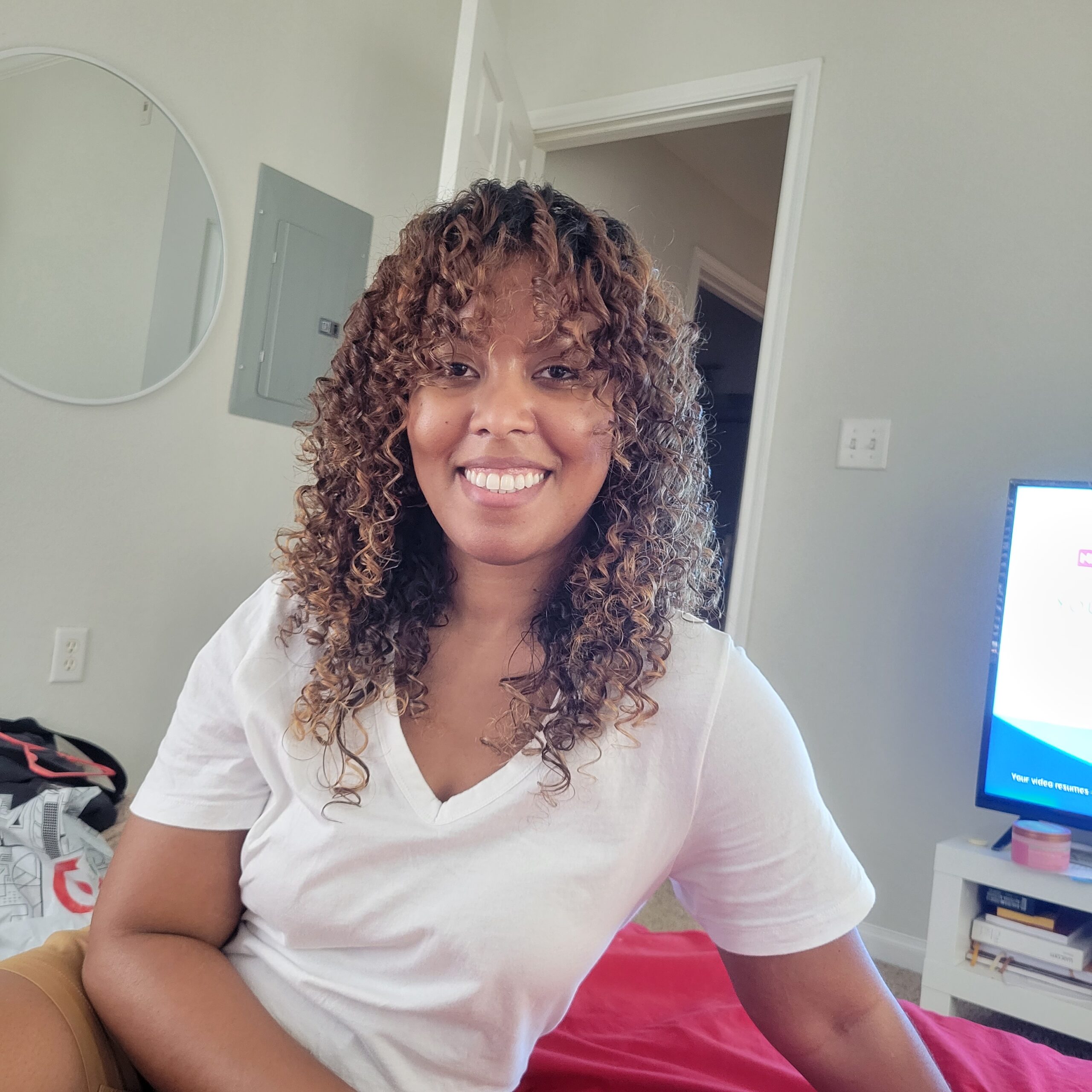
My first appointment was before I became pregnant. While I appreciated that the stylist cared about my hair’s health, I left feeling as if I had been lectured about its condition and my decision to color it. She also styled my hair in a way that didn’t match how I normally wear it, which made it difficult for me to evaluate the haircut itself.
Looking back, I realize I was also a little hesitant before the appointment. She had a wavy hair texture and worked independently in a solo salon. At the time, I wasn’t sure what to expect, and the overall experience confirmed that she simply wasn’t the right fit for me.

A few years later, after my son was born, I decided it was time for a big chop and started looking for another curly hair specialist. This time, I approached my search differently.
Although many of the photos in my stylist’s portfolio featured looser curl patterns than mine, I noticed something else that stood out. The salon regularly shared photos of the entire team attending advanced curly-hair education classes in New York City, including training in multiple curly-cutting methods. It was clear that continuing education was a priority, and that gave me confidence in the salon as a whole.
I decided to trust her with my big chop, and I was very happy with the results.
That experience changed the way I evaluate curly hair stylists. Today, I still look at a portfolio, but I also pay close attention to a stylist’s education, their willingness to continue learning, and whether they take the time to understand my hair goals before picking up the scissors.
Curly Haircut FAQs
What is the difference between a Deva Cut and a Rezo Cut?
A Deva Cut focuses on shaping each curl individually to enhance natural definition, while a Rezo Cut is designed to balance volume, movement, and length.
Are curly haircuts better dry or wet?
Neither method is automatically better. Dry cuts allow the stylist to see your natural curl pattern, while wet cuts rely on the stylist’s understanding of how your curls will shrink as they dry.
Can I get a curly haircut if I straighten my hair?
Yes. Be sure to tell your stylist how you typically wear your hair so they can recommend a haircut that works with your routine.
How often should curly hair be trimmed?
Most people benefit from a trim every 8 to 16 weeks, although the ideal schedule depends on your hair goals, overall hair health, and how quickly your hair grows.
Final Thoughts
Choosing a curly haircut doesn’t have to be confusing. Once you understand what each cutting method is designed to do, it becomes much easier to ask the right questions, communicate with your stylist, and choose a haircut that fits your hair, your routine, and your goals.
Remember that the name of the haircut is only one piece of the puzzle. An experienced stylist who understands your curls and listens to your goals is often more important than any specific cutting technique.
Related Articles
- Heatless Hairstyles Can Still Damage Your Curls
- Best Deep Conditioners for Curly Hair
- Understanding Hair Porosity
- Pool Day Curly Hair Routine
- Beach Day Curly Hair Routine
Let’s Make Inbox Magic
Join my circle to unlock the Curly Mama Freebie Library, your all-access pass to printables, checklists, and resources made for busy moms and curly hair lovers.
Already subscribed? Click here to access the Freebie Library.