Hair Density Explained: How to Tell if You Have Low, Medium, or High-Density Hair
Have you ever wondered why your curly hair looks fuller than someone else’s, even when you have a similar curl pattern? Or why a haircut that looks voluminous on someone else doesn’t have quite the same effect on your hair?
One possible explanation is hair density.
Hair density is one of several characteristics that influence how your hair looks, feels, and responds to styling. Understanding yours can help you make more informed decisions about product application, sectioning, haircuts, and your overall routine.
In this guide, we’ll explore what hair density means, how to estimate whether you have low-, medium-, or high-density hair, and how to work with your natural density.
What Is Hair Density?
Hair density refers to the number of individual hair strands growing within a given area of your scalp.
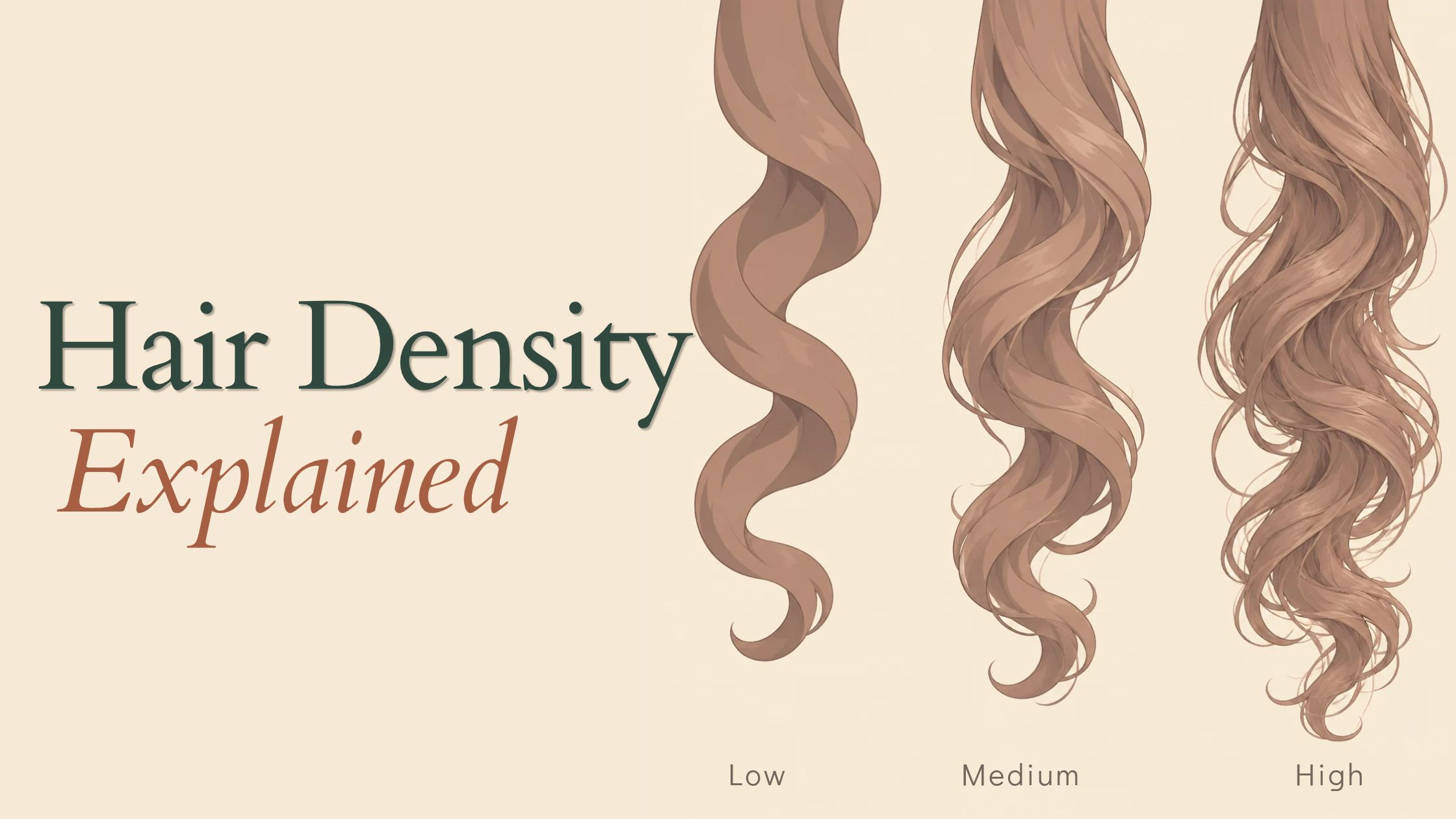
It’s commonly described using three general categories:
- Low-density hair: Fewer strands growing within a given area of the scalp.
- Medium-density hair: A moderate number of strands, falling between low and high density.
- High-density hair: More strands growing within the same area.
These categories describe how closely hair strands are distributed across the scalp. They don’t tell you how thick each individual strand is.
Hair density is influenced by factors including genetics and age, and it can vary between different areas of the scalp.
Although density can be measured professionally using specialized imaging and hair-counting methods, most people don’t need an exact number to make practical haircare decisions.
Low vs. Medium vs. High Hair Density
Each density category can have a different appearance, although curl pattern, strand thickness, length, and styling can make these differences harder to recognize.
| Hair density | General characteristics | What you might notice |
| Low | Fewer strands per area of scalp | More scalp may be visible, even when the hair is clean and dry |
| Medium | A moderate number of strands | Scalp visibility and overall fullness may fall between low and high density |
| High | More strands per area of scalp | Scalp may be harder to see without deliberately parting or separating the hair |
These are general clues, not diagnostic criteria. Someone with high-density fine hair may have less apparent volume than someone with medium-density coarse hair.
Likewise, curly hair can appear fuller because of its shape, even when the number of strands is relatively low.
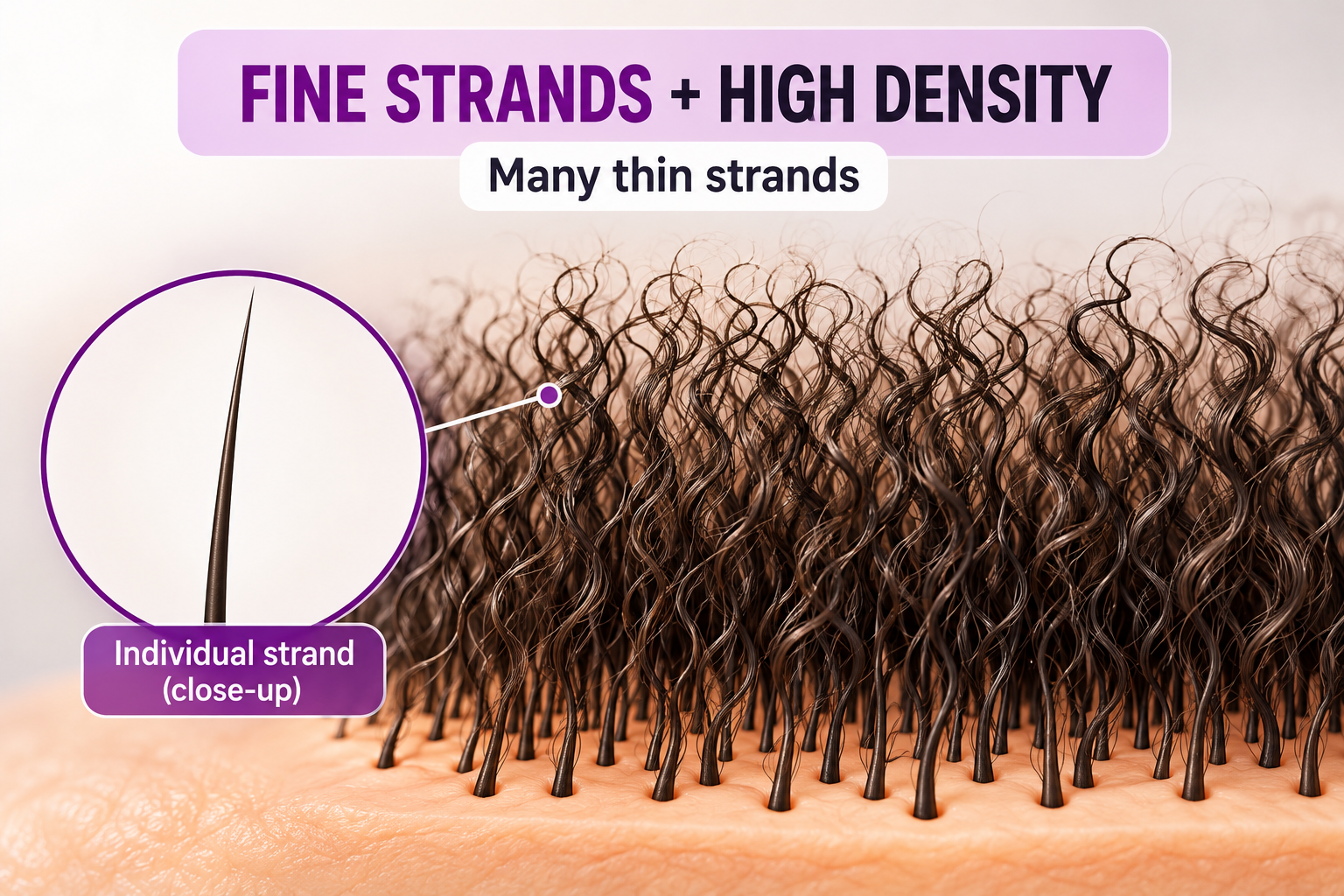
The illustrations below show different combinations of hair density and strand thickness. Remember, any density level can occur with fine, medium, or coarse strands.
Low-Density Hair
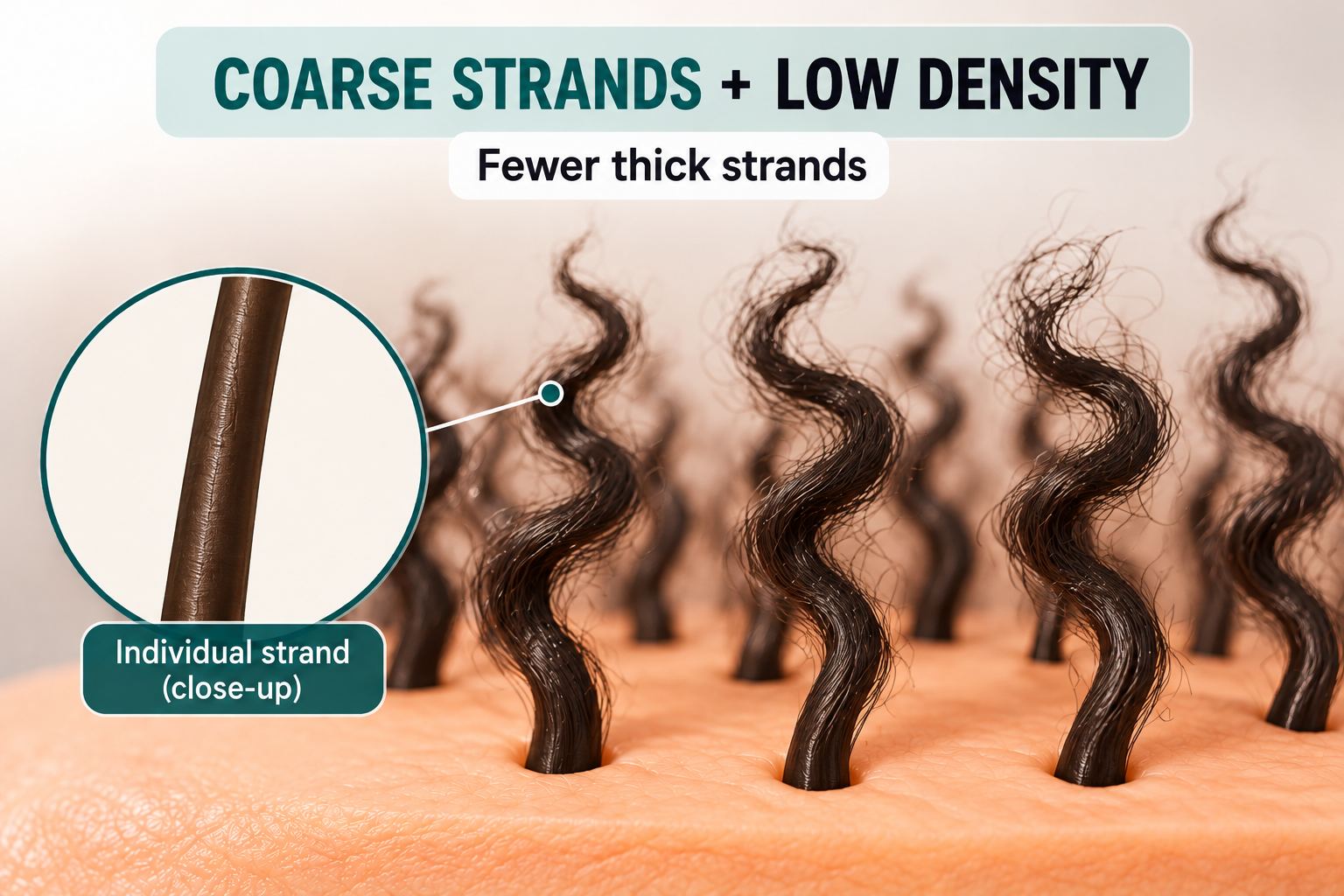
Low-density hair has fewer strands growing within a given area of the scalp.
Depending on the curl pattern and strand thickness, the scalp may be easier to see, particularly around the part or when the hair is separated into sections.
Low density doesn’t automatically mean damaged or unhealthy hair. Some people naturally have fewer hair follicles producing visible strands.
Medium-Density Hair
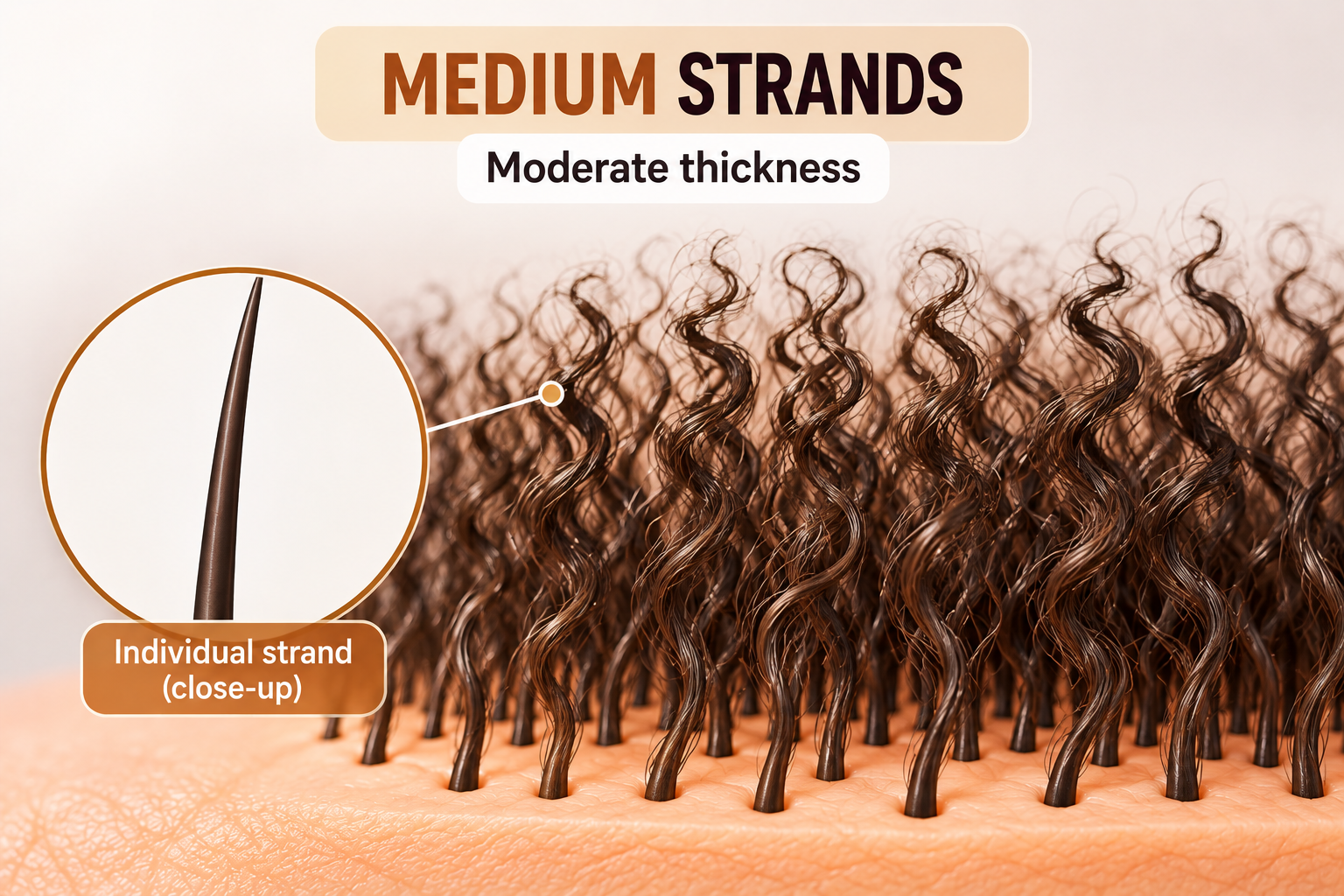
Medium-density hair falls between low and high density.
It may provide noticeable coverage without having the same amount of hair as someone with high density. However, the overall appearance can vary considerably depending on strand thickness, curl pattern, and haircut.
Medium-density hair can still look very full, especially with a haircut and styling routine that encourage volume.
High-Density Hair
High-density hair has more strands growing within the same area of the scalp.
It may require additional sectioning during washing, conditioning, detangling, or styling to ensure products reach the hair evenly.
However, high density doesn’t necessarily mean coarse strands or exceptionally voluminous hair. Fine strands can grow very densely, too.
Hair Density vs. Strand Thickness: What’s the Difference?
One of the most common sources of confusion is using the words thick hair and dense hair interchangeably. They’re not the same characteristic.
Hair density describes how many strands are growing from the scalp. Strand thickness, also called hair diameter, describes the width of an individual strand.
Strand thickness is generally categorized as fine, medium, or coarse.
| Characteristic | What it measures | Common categories |
| Hair density | Number of hair strands within an area of the scalp | Low, medium, high |
| Strand thickness | Diameter of an individual hair strand | Fine, medium, coarse |
| Hair volume | How much space the hair appears to occupy | Influenced by density, curl pattern, styling, and other factors |
For example, someone can have high-density hair with fine strands. They have many individual hairs, but each strand is relatively narrow.
Another person might have low-density hair with coarse strands. They have fewer individual hairs, but each strand has a larger diameter.
This is why hair can look thick without necessarily being high density. Understanding the difference is especially helpful when choosing products and deciding how much product to apply.
How to Estimate Your Hair Density at Home
There isn’t one universally reliable at-home test for identifying hair density. However, looking at several characteristics together can help you make a reasonable estimate.
1. Examine Your Scalp Visibility
Start with clean, dry hair in its natural state.
Look at your scalp in a mirror under consistent lighting, without deliberately creating a new part.
- If your scalp is easily visible in multiple areas, you may have lower density.
- If your scalp shows through in some areas but is generally covered elsewhere, you may have medium density.
- If your scalp is difficult to see without separating your hair, you may have higher density.
Keep in mind that curl pattern, hair color, lighting, and styling can influence scalp visibility. A visible part alone doesn’t establish that someone has low-density hair.
2. Observe Your Ponytail
If your hair is long enough, gently gather it into a ponytail without pulling tightly.
Notice how much hair you’re gathering and how full the ponytail appears.
A fuller ponytail can suggest greater overall hair mass, but it isn’t a direct measurement of density.
Why? Because ponytail circumference is influenced by both the number of strands and the thickness of those strands. Hair length, layers, and curl pattern can also affect the result.
Use this as an additional observation rather than a definitive test.
3. Compare Different Areas of Your Scalp
Hair isn’t necessarily distributed evenly across your entire head. You may notice differences around your temples, hairline, crown, or part compared with the back of your head.
Some variation is normal. Rather than judging your density from one small section, consider how your hair looks across your scalp as a whole.
Important: If you’ve noticed new or progressive thinning, a widening part, unusual shedding, or distinct patches of hair loss, don’t assume it’s simply your natural density. A dermatologist can help identify possible causes.
How Hair Density Can Affect Your Curly-Hair Routine
Your density doesn’t determine every product or technique you should use, but it can help explain why certain routines feel easier or more difficult.
Product Application
Someone with high-density hair may need to work in smaller sections to distribute conditioner, leave-in products, or stylers evenly.
With low-density hair, applying large amounts of product may be unnecessary, particularly when the individual strands are also fine.
However, density alone doesn’t determine how heavy or lightweight a product should be. Strand thickness, product formulation, hair condition, and styling goals also matter.
Sectioning and Detangling
High-density hair can benefit from more sections during detangling and styling because there are more strands to work through.
Lower-density hair may require fewer sections, although tight curls, tangling, or longer lengths can still make sectioning useful.
The goal is to create sections that allow you to handle your hair gently and distribute products thoroughly.
Drying Time
Higher density can contribute to longer drying times because there are more strands to dry.
However, drying time is also affected by strand thickness, how much water and product remain in the hair, airflow, humidity, and styling technique.
Two people with similar density may still have very different drying experiences.
Haircuts and Styling
Hair density can influence how a haircut looks once it’s styled.
For example, removing too much weight from lower-density hair may reduce the appearance of fullness. Meanwhile, someone with high-density hair might benefit from carefully placed layers that create shape and movement.
Neither approach is universal.
Your curl pattern, strand thickness, length, and desired shape should all be considered when discussing a haircut with your stylist.
Related reading: Curly Hair Cuts Explained — DevaCut, Rëzo Cut, Ouidad, and Other Cutting Techniques.
Can You Change Your Hair Density?
Your natural hair density is largely influenced by genetics, but the number of visible, actively growing hairs can change over time.
Age, hormonal changes, certain health conditions, medications, and forms of hair loss can affect hair density.
Haircare products may improve the appearance of fullness, reduce breakage, or support scalp and hair health, but a shampoo, oil, or styling cream cannot simply create new hair follicles.
If your hair has always been naturally low density, that doesn’t automatically mean there’s a problem to correct.
If your density has noticeably decreased, however, it’s worth investigating the cause rather than relying on products marketed to make hair grow thicker.
Common Misconceptions About Hair Density
“If my hair looks thick, I must have high density.”
Not necessarily. Coarse strands, tight curls, certain haircuts, and styling techniques can create the appearance of fullness without a particularly high strand count.
No. Low density can be a natural characteristic. The more important distinction is whether your density has always been relatively low or has noticeably changed.
“Low-density hair means unhealthy hair.”
“High-density hair always needs heavy products.”
Not necessarily. Someone with high-density fine hair may prefer lightweight products, while someone with lower-density coarse hair may respond differently. Product choice depends on more than density.
“My hair density is the same everywhere.”
Not always. Hair distribution can vary between different areas of the scalp.
FAQs: Hair Density
How do I know if I have low- or high-density curly hair?
Look at several clues, including scalp visibility, the overall amount of hair, and how much hair you gather into a ponytail. Because curl pattern and strand thickness affect appearance, these observations provide estimates rather than precise measurements.
Is hair density the same as hair thickness?
No. Density refers to the number of strands within an area of the scalp. Strand thickness refers to the diameter of an individual strand.
Does hair density determine your curl type?
No. Hair density and curl pattern are separate characteristics. People with similar curl patterns can have very different densities.
Final Thoughts
Understanding your hair density can make it easier to set realistic expectations for your hair and choose techniques that work with its natural characteristics.
But density is only one piece of the picture.
Your strand thickness, curl pattern, hair condition, haircut, and styling choices all contribute to how your hair looks and behaves.
You don’t need to know the exact number of strands growing from your scalp to benefit from understanding density. Even a general estimate can help you make more informed choices.
And remember: having more hair doesn’t automatically mean having healthier hair, just as having fewer strands doesn’t mean your hair is unhealthy.
The goal is to understand the hair you have and care for it accordingly.
Related Articles
- Strand Thickness Explained: Learn the difference between fine, medium, and coarse strands.
- Curly Hair Cuts Explained: Explore different curly-hair cutting techniques and how they influence shape and volume.
- Curly Hair Resource Guide: Explore foundational curly-hair concepts and build a routine that fits your needs.
Let’s Make Inbox Magic
Join my circle to unlock the Curly Mama Freebie Library, your all-access pass to printables, checklists, and resources made for busy moms and curly hair lovers.
Already subscribed? Click here to access the Freebie Library.