Type 3 Curly Hair Explained (3A, 3B, 3C) and Transitioning Tips
Disclaimer: This post contains affiliate links. If you purchase through these links, I may earn a small commission at no extra cost to you. I only recommend products I trust and believe will be helpful for your curls.
So what exactly is Type 3 curly hair? And how do you tell if you’re rocking 3A, 3B, or 3C curls? If you’ve ever stared at a curl chart wondering where you fit in or if you’re in the middle of transitioning from heat damage or relaxers, this guide will clear it up for you. I’ll walk you through the differences between the subtypes, everyday struggles, realistic routines, and how porosity, density, and protein sensitivity all play a role in keeping your curls thriving.
What is Type 3 Curly Hair?
Type 3 curls fall right in the middle of the curly spectrum, tighter than waves, looser than coils. They usually form precise “S” shapes or ringlets, with more bounce and body than Type 2 hair but less density than Type 4.
How Type 3 Fits on the Curly Hair Chart
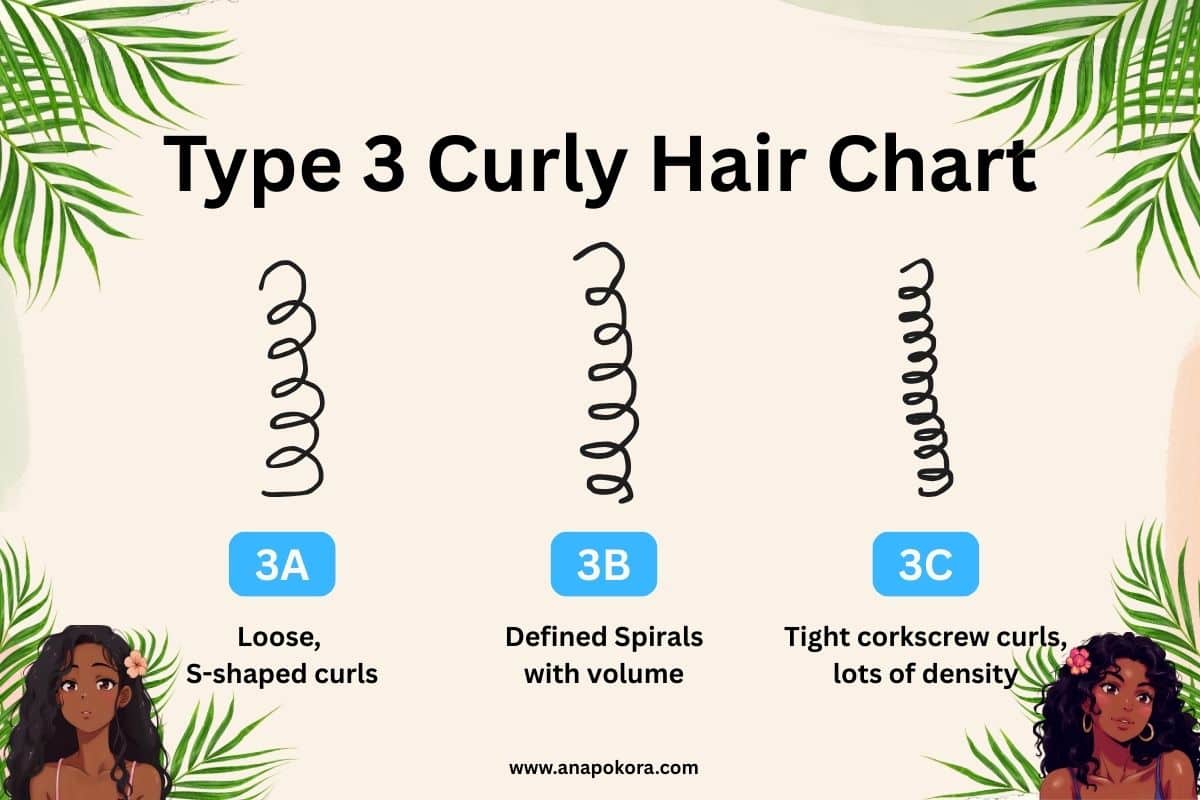
On the curly hair chart, Type 3 sits between wavy (Type 2) and coily (Type 4). The range goes from loose spirals (3A) to springy ringlets (3B) to densely packed corkscrews (3C). If you’ve got more than one curl type on your head, that’s normal. Most people are a mix.
The Difference Between 3A, 3B & 3C at a Glance
- 3A: Loose, defined S-shaped curls about the size of a sidewalk chalk.
- 3B: Tighter spirals, about the size of a Sharpie marker.
- 3C: Corkscrew curls, about the size of a pencil, dense and voluminous.
Quick Guide to 3A, 3B, and 3C Curls

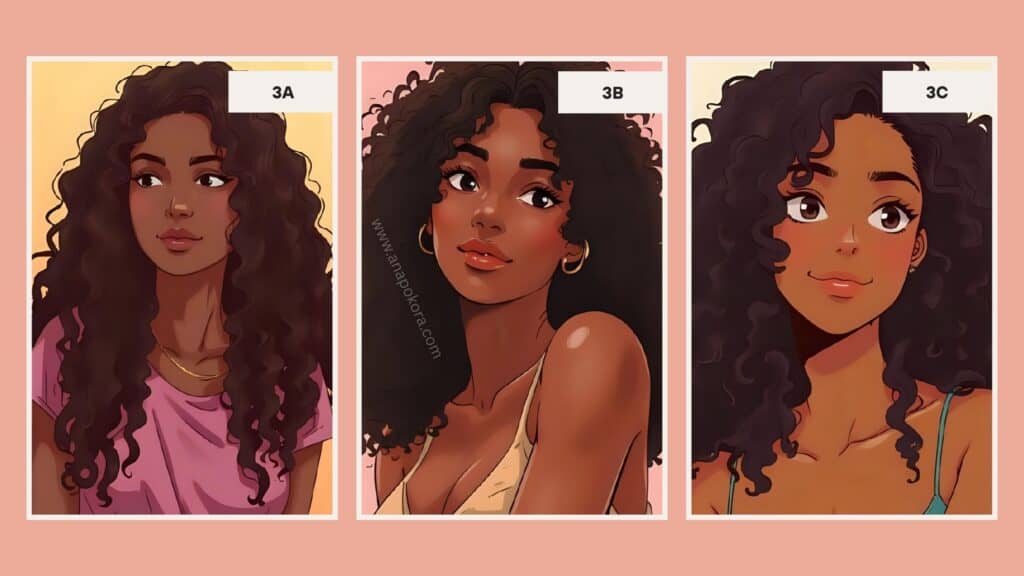
3A Hair – Loose, S-Shaped Curls
3A curls are big, shiny, and defined, but can fall flat at the roots. The main struggle? Frizz at the ends, with limp volume at the top. Lightweight gels, curl creams, and root clipping help maintain the bounce.
3B Hair – Spirals with Volume
3B curls are tighter ringlets that pack in volume, but they’re also prone to dryness and the dreaded “triangle hair” (big at the bottom, flat at the crown). Moisture is key here, and layering leave-ins under stylers gives the best results.
3C Hair – Dense Corkscrew Curls
3C curls are springy and dense, characterized by ample volume and minimal shrinkage. They’re prone to dryness and tangling, but when properly moisturized, they’re incredibly defined and full of volume. Heavy creams, butters, and strong gels typically provide this texture with the hold and protection it needs.
Transitioning Tips for Type 3 Hair
Detoxing from Silicones & Sulfates
When transitioning, your hair needs a clean slate. Sulfates strip moisture, and silicones can weigh curls down if not properly clarified. Switch to gentle cleansers and use a clarifying treatment once a month to remove buildup.
Balancing Protein + Moisture

Transitioning curls often feel weak or mushy. That’s usually a sign of imbalance. Alternate between protein-rich masks (to strengthen) and moisturizing deep conditioners (to soften and hydrate).
Note: Some curlies are protein sensitive, meaning too much protein makes their hair stiff instead of strong. If that’s you, lean more on moisturizing masks.
Protective Night Routines
Frizz and breakage often show up overnight. A silk or satin pillowcase, scarf, or bonnet protects curls while you sleep. For longer curls, try the “pineapple” style (loosely tie your hair on top of your head).
Patience During the “Awkward Phase”
Let’s be real: the transition phase can be frustrating. You might have half-straight ends and half-curly roots. Protective styles, twist-outs, or flexi rods can help blend textures. The key is patience; healthy curls are worth the wait.
A General Routine for Type 3 Curls
Cleansing + Conditioning Basics
Cleanse weekly (or as needed) with a gentle, sulfate-free shampoo. Always follow with a hydrating conditioner to detangle and restore slip.
Lightweight vs Heavy Products
- 3A curls: Prefer lighter mousses, foams, or gels to avoid weighing curls down.
- 3B curls: Thrive with leave-ins, curl creams, and medium-hold gels.
- 3C curls: Do best with heavier creams, butters, and strong gels for definition and longevity.
Density matters too. Fine-density hair does better with lighter formulas, while high-density hair often needs layering with heavier products for full definition.
Styling for Definition & Frizz Control
Apply products to soaking wet hair, then use the praying hands method or finger-coiling for definition. Diffuse on low heat or air dry. Scrunch out the crunch for soft, defined curls.
Recommended Wash & Go Kits for Type 3 Curls
3A Curls – Lightweight & Defined
Porosity breakdown:
- Low: lightweight shampoo/conditioner, skip heavy leave-ins, mousse/foam.
- Medium: hydrating shampoo + conditioner, light leave-in, gel.
- High: richer conditioner, leave-in with slip, gel layered over cream.
- Skip heavy butters and oils; they’ll flatten the curl pattern.
Want a full routine breakdown? Check out my Type 3A Curly Hair Guide for detailed product combos, styling tips, and refresh-day routines.
3B Curls – Balanced Spirals
Porosity breakdown:

- Low: Clarifying shampoo 1–2 times/month, lightweight leave-in, gel.
- Medium: moisturizing shampoo + conditioner, curl cream + gel combo.
- High: creamy shampoo/co-wash, thick conditioner, cream leave-in + gel.
- Skip ultra-light products (they don’t tame frizz) or heavy butters daily (they build up).
Explore my Type 3B Curly Hair Guide (Coming soon) to learn the best wash-day products, layering methods, and humidity-proof styling tips.
3C Curls – Moisture & Longevity
Porosity breakdown:
- Low: Lightweight cleanser, conditioner with slip, light cream + gel.
- Medium: Hydrating shampoo, thick conditioner, cream leave-in + gel.
- High: Co-wash or rich shampoo, weekly deep conditioner, cream leave-in, strong gel/butter.
- Skip mousse as main styler + protein overload (back-to-back).
Need help managing shrinkage and maintaining moisture? Head to my Type 3C Curly Hair Guide for a complete care routine and styling ideas.
Transitioning Kits for Type 3 Hair
If you’re transitioning from heat damage or relaxers, your curls will likely be in different stages, with looser roots and straighter ends. Focus on gentle cleansing, deep conditioning, and low manipulation styles until your curl pattern becomes more even.
Essentials:
- Gentle cleanser (sulfate-free shampoo or co-wash)
- Rich conditioner for detangling
- Lightweight, hydrating leave-in
- Deep conditioner (weekly)
- Styler: mousse/cream + gel combo
- Tools: wide-tooth comb, satin bonnet/pillowcase
- Avoid harsh clarifying shampoos too often, heavy protein treatments back-to-back, or frequent heat styling.
Bonus Mentions: Henna, Protein Sensitivity & Density
- Henna or Cassia: Can strengthen curls and add shine. Great for 3B/3C with high porosity. (Read my full Henna for Curly Hair Guide for details.)
- Protein Sensitivity: Watch how your hair responds. Stiff, straw-like curls = too much protein. Mushy, limp curls = not enough.
- Density: Fine-density = lighter stylers. High-density = heavier layering to control volume.
FAQs About Type 3 Hair
Can your curl type change over time?
Yes! Hormones, pregnancy, postpartum changes, heat damage, and even aging can cause your curl pattern to loosen or tighten. For example, some people notice that their 3B curls resemble 3A after years of flat ironing, or shift toward 3C during postpartum regrowth. Your routine and overall health also play a role.
How do I know if my curls are 3A, 3B, or 3C?
The easiest way is to compare your curl circumference to everyday items: Chalk = 3A, Sharpie = 3B, Pencil = 3C. Remember: most people have a mix of curl types on their head, so don’t stress if you see more than one.
Do I need different products for low vs. high porosity Type 3 hair?
Yes. Porosity matters just as much as curl type. High porosity: richer conditioners, leave-ins with slip, and sealing gels or butters to lock in moisture. Low porosity: lightweight leave-ins, mousses, or foams that won’t just sit on the hair. Medium porosity: a balance of hydration and hold, like curl creams layered with gel.
What’s the best routine if I’m transitioning?
Stick to the basics: gentle cleansing, weekly deep conditioning, and protective or styling options (such as twist-outs, braid-outs, or flexi rods). Be patient with uneven textures; the awkward phase is temporary.
Can I mix products from different routines (3A, 3B, 3C)?
Absolutely. Curl types rarely live in neat boxes. If your crown is more 3C but your hairline is 3A, you might find yourself mixing a lightweight foam in one area and a thicker gel in another. The key is experimenting until your curls look and feel balanced.
Final Thoughts
Whether you’re 3A with loose spirals, 3B with bouncy ringlets, or 3C with dense corkscrews, all Type 3 curls share the same needs: hydration, protection, and consistency. Transitioning can be tough, but with patience and the right routine, your curls will reward you.
But curl type is just the beginning. Porosity, density, protein balance, and even treatments like henna can significantly impact your results. That’s why I created my Type 3 Curls Hair Care Guide (Coming Soon), a full roadmap that goes beyond curl type with:
- Wash day routines for every porosity + density combo
- Product recommendations by budget
- Do’s and don’ts for protein sensitivity
- Printable routine tracker to keep you consistent
If you’re ready to take the next step, check out my guide on seasonal curly hair routines to see how the weather impacts frizz, moisture, and curl definition all year long.
And if skincare is your thing too, you’ll love my recent article on building a radiant skincare routine.
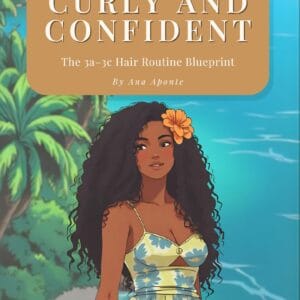
The Complete 3A–3C Curl Routine—All in One Guide
This ebook walks you through wash day, refreshes, seasonal care, and product logic for every Type 3 curl pattern. Designed to be saved, referenced, and reused—not skimmed once and forgotten.


2 Comments