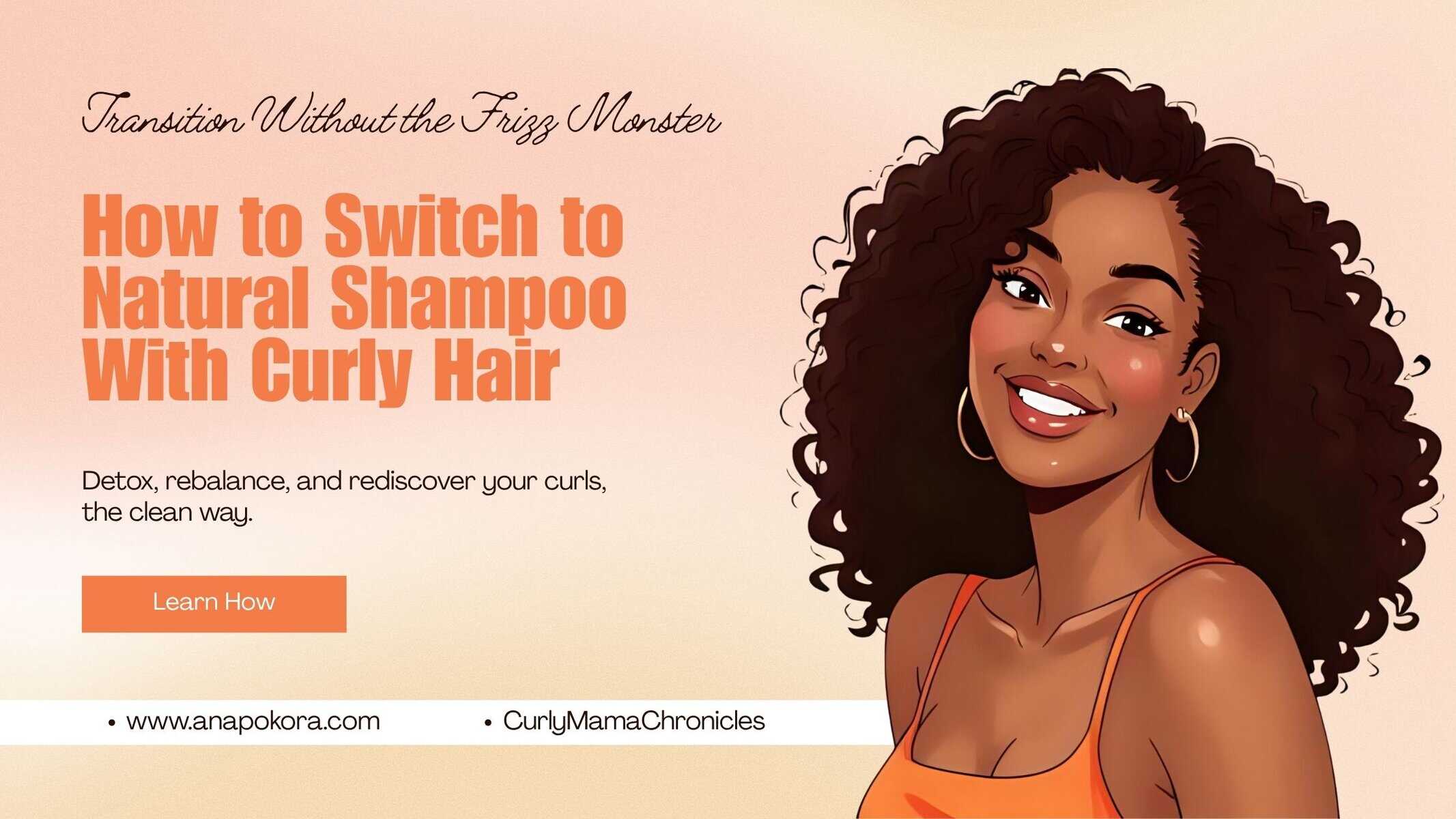
How to Transition to Natural Shampoo With Curly Hair (Without the Frizz Monster Phase)
This post may contain affiliate links, which means I may earn a small commission if you make a purchase through them at no extra cost to you. All opinions are my own. See my full disclosure here.
If you’re thinking about switching to a clean or natural shampoo, there are a few caveats to keep in mind. It’s not as simple as swapping bottles. Your hair and scalp will go through an adjustment period.
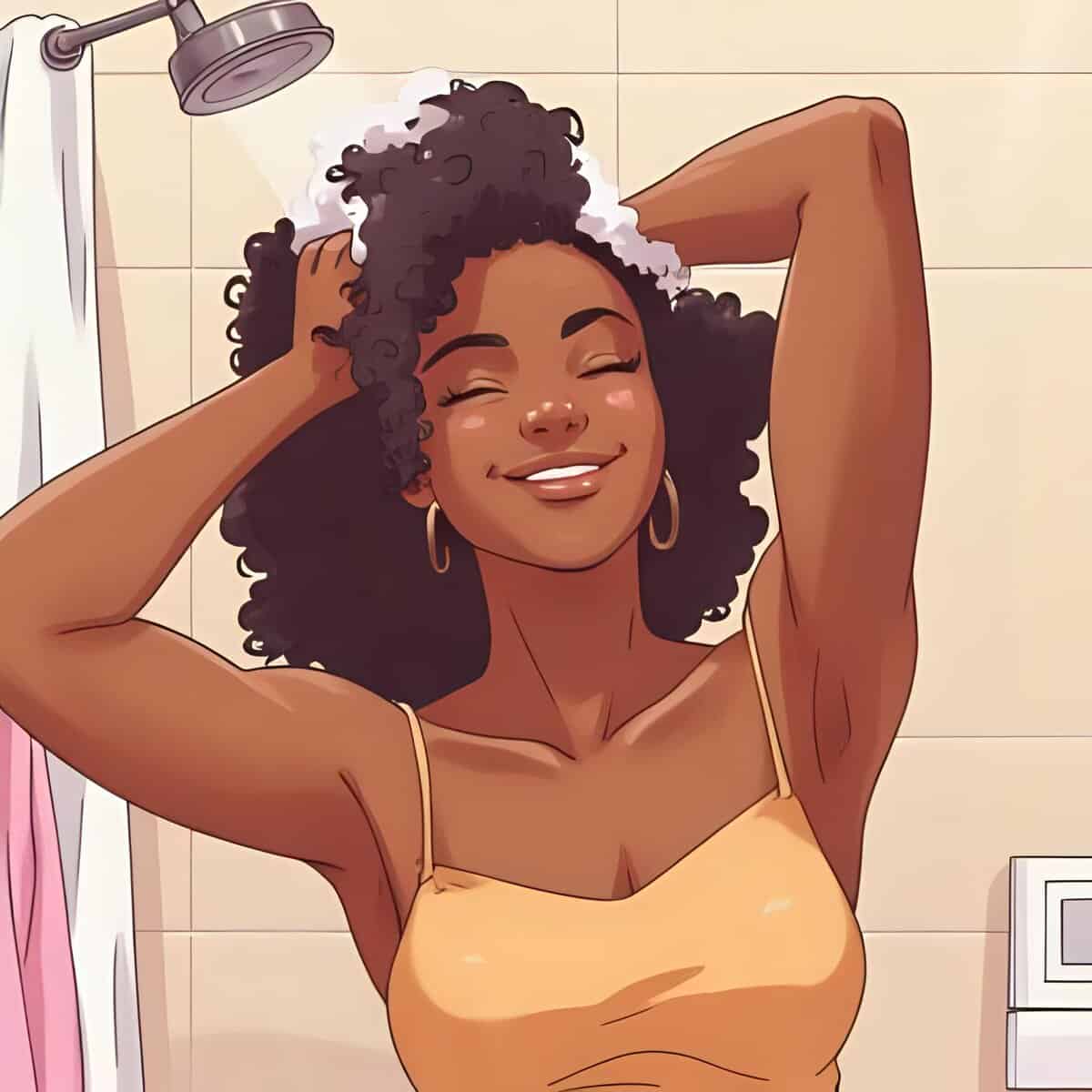
If you’ve already met the dreaded Frizz Monster, you probably didn’t take the right steps to transition. This temporary chaos isn’t your hair “hating” natural shampoo, it’s your scalp detoxing from years of silicones, sulfates, and heavy conditioners that masked your hair’s real condition. You have to meet your hair where it is now and walk with it, step by step, to where you want it to be.
Transitioning to natural shampoo with curly hair takes patience, the right routine, and a solid understanding of what’s actually happening. In this guide, I’ll break down how to survive the detox stage without giving up on your curls and share curl-friendly shampoo picks to make it smoother.
Why Transitioning Is Harder With Curly Hair
Switching to a natural shampoo isn’t just about ditching ingredients it’s about how your curls interact with them. Curly hair holds onto buildup, loses moisture faster, and depends heavily on balance. When you remove the products your hair is used to, you’re asking your scalp and strands to relearn how to function without them.
Traditional shampoos often rely on silicones and sulfates. They get a bad reputation, but they’re not villains, they simply serve a specific purpose.
- Silicones help protect the hair shaft by sealing it, adding shine, and reducing friction. They’re especially helpful for high-porosity or heat-styled hair that needs that extra barrier.
- But over time, some silicones (especially non–water-soluble ones) can build up on curly hair, blocking moisture and making strands feel coated or resistant to hydration.
Sulfates, meanwhile, are powerful cleansers that remove oils, residue, and dirt. That’s great for resetting the scalp but curls rely on natural oils for definition and elasticity. Once you remove sulfates, your scalp and strands go through an adjustment period.
That’s where porosity comes in.
- High-porosity curls absorb and lose moisture quickly, so they can feel dry or brittle during detox.
- Low-porosity curls resist water and product absorption, making them feel waxy or heavy as buildup starts lifting off.
This explains why curls often show detox symptoms more dramatically than straight hair. They need a delicate balance of moisture, weight, and natural oils and when that balance is disrupted, frizz and flatness are often the first signs.
The good news? It’s temporary. Once your curls adapt to lighter, silicone-free formulas and your scalp normalizes oil production, your natural pattern begins to reemerge softer, lighter, and more defined than before.
Signs Your Curls Are Detoxing
Once you start your transition, your hair may act completely out of character and that’s actually a good sign. These changes mean your scalp is rebalancing and your strands are releasing buildup. Think of it as your curls detoxing from years of buildup revealing your true texture.
Extra dryness and frizz: The first stage of silicone and product residue leaving your strands.
- Low porosity hair may feel rough or waxy as buildup lifts.
- Medium porosity hair might fluctuate, soft one wash day, rough the next, as it tries to find balance.
- High porosity hair may feel brittle or lose moisture quickly.
Limp waves or curls: Your hair feels “flat” because it’s no longer coated it’s light but not yet hydrated.
- Low porosity curls might stay weighed down longer.
- Medium porosity curls can look inconsistent bouncy one day, stretched the next.
- High porosity curls might puff up or lose definition faster.
Oily roots and dry ends: The scalp is overcompensating while your lengths still need moisture.
- Fine or low-density curls get greasy faster.
- Medium porosity curls usually balance out quickest once scalp oils regulate.
- Thicker textures often stay dry mid-shaft and at the ends.
Flaky scalp or itchiness: A normal reaction to pH changes and removal of buildup.
- If you live in a hard-water area, you might notice more flakes until your scalp adjusts or you start using filtered water.
Don’t confuse this phase with damage, it’s a reset. Once your scalp recalibrates, your true curl pattern and shine return.
Step-by-Step Transition Plan for Curly Hair
Before you go natural, start with a deep clarifying wash to remove old buildup. This step gives your new shampoo a clean slate before you begin your transition.
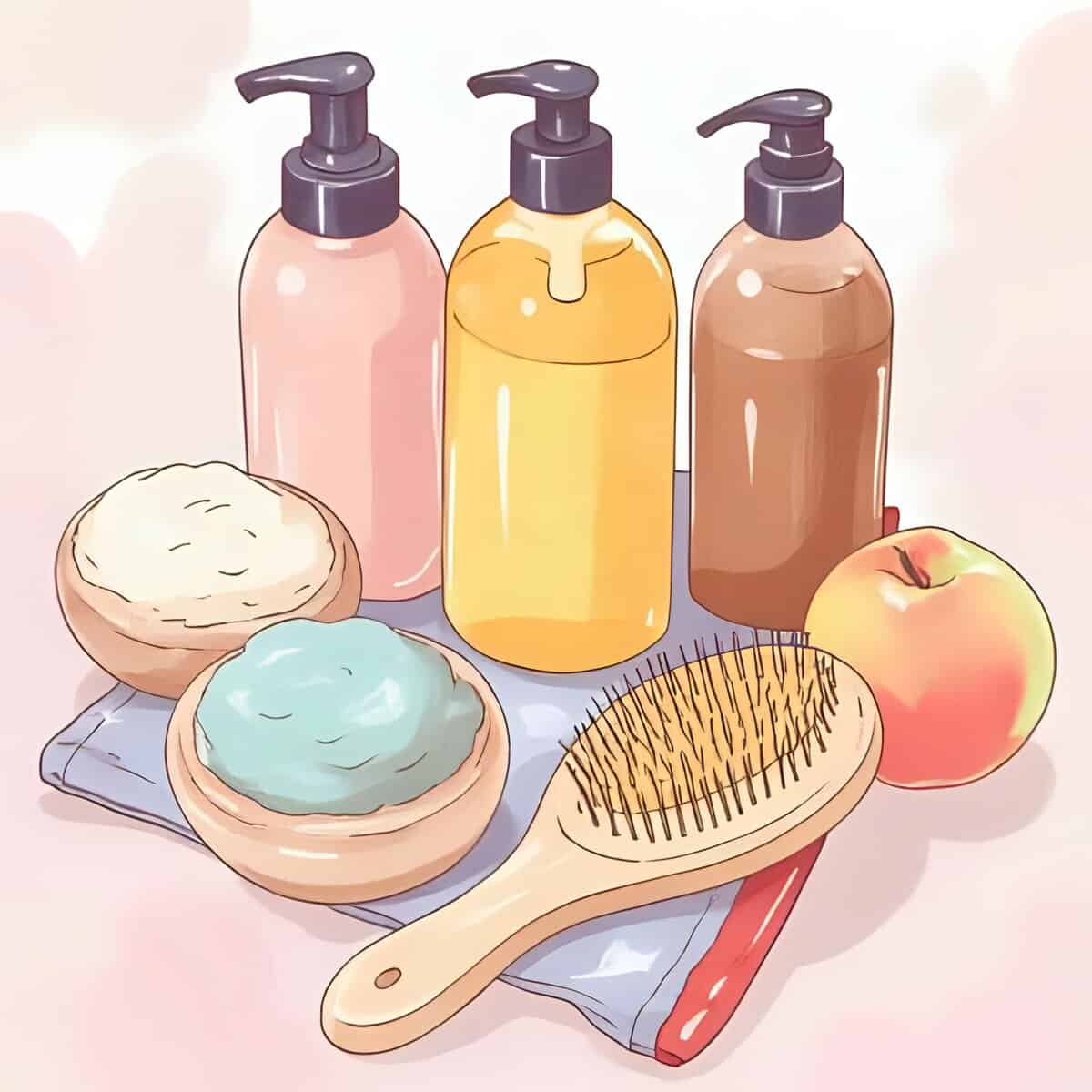
You can use a clarifying shampoo or a natural treatment like an apple cider vinegar rinse or a bentonite clay hair mask if you prefer a more detox-focused reset. Clay masks are especially great for curly hair because they lift buildup, balance oil, and define curls without stripping.
Alternate your old shampoo with your new one for the first two weeks. This eases your scalp into producing its natural oils again.
Curly hair often needs slip, but heavy products can backfire. Choose a clean, silicone-free conditioner and apply mainly to your ends.
The “frizz monster” stage usually lasts 2–4 weeks, depending on buildup and porosity. Stay consistent, and resist the urge to go back to your old products, it’ll only restart the cycle.
Use protective styles like braids or twists to reduce manipulation and retain moisture.
Let’s Make Inbox Magic
Join my circle to unlock the Curly Mama Freebie Library, your all-access pass to printables, checklists, and resources made for busy moms and curly hair lovers.
Already subscribed? Click here to access the Freebie Library.
Tips for Switching to Natural Shampoo and Avoiding the Frizz Phase
- Use a scalp scrub or brush once a week to loosen buildup and stimulate circulation.
- Deep condition weekly to rehydrate curls, the more moisture, the faster the frizz fades.
- Co-wash on off-days to avoid over-stripping while maintaining cleanliness.
- Use filtered shower water if you live in a hard-water area (minerals can worsen dryness).
If you’re unsure whether hard water is part of the problem, check out my post Hard Water and Curly Hair: Rescue Routine, it breaks down signs and solutions.
Best Natural & Silicone-Free Shampoos for Curly Hair Detox
To keep this list fresh, I’ve included different products from the ones featured in my Best Natural Shampoos for Curly Hair guide.
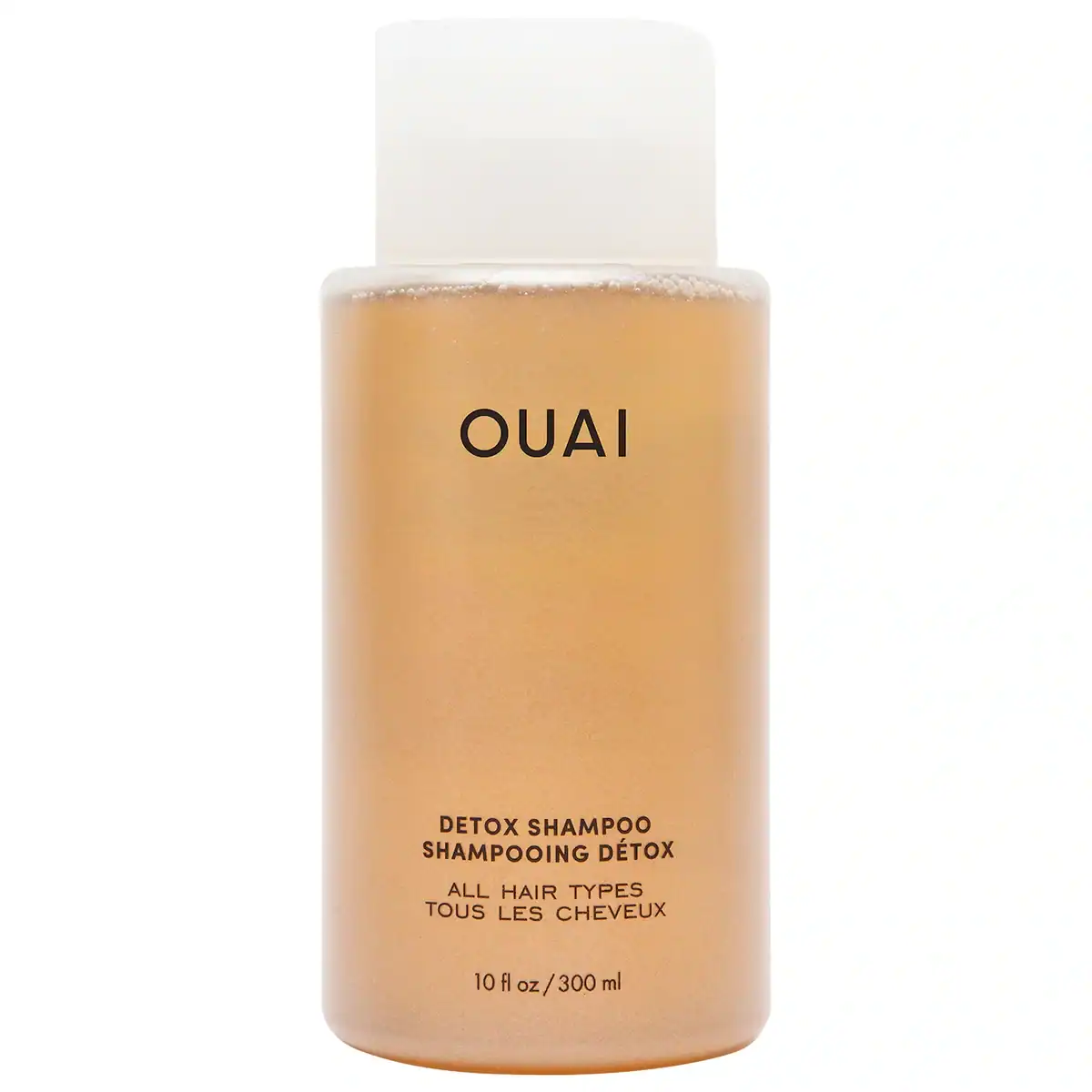
OUAI Detox Shampoo
Best For: Clarifying before starting your natural transition
Best Season: Summer or after heavy product buildup
Why It’s Good: Removes silicones, dry-shampoo residue, and hard-water minerals that weigh curls down. Leaves the scalp refreshed without harsh stripping.
Pro tip: Use once every 1–2 weeks during the transition, then switch to a gentler formula.
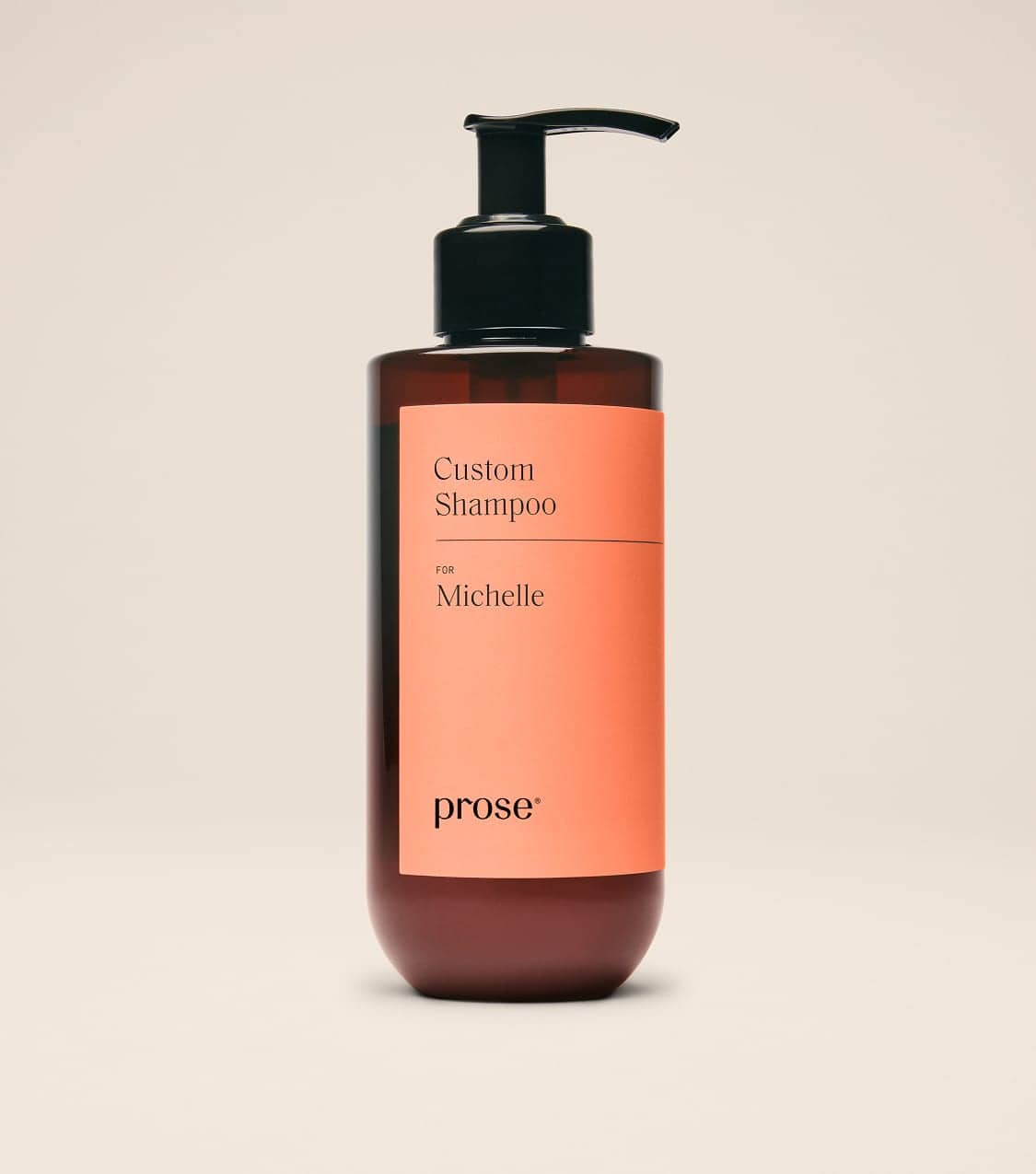
Prose Custom Curl Shampoo (Personalized Clean Formula)
Best For: Tailored everyday cleansing for unique curl patterns
Best Season: Year-round; formulas can be adjusted seasonally
Why It’s Good: Prose creates custom shampoo based on your curl type, scalp condition, and local climate. It’s silicone-free, sulfate-free, and built to match your porosity and goals, from moisture balance to scalp health. It’s one of the most innovative “transition-friendly” options because it meets your curls where they are..
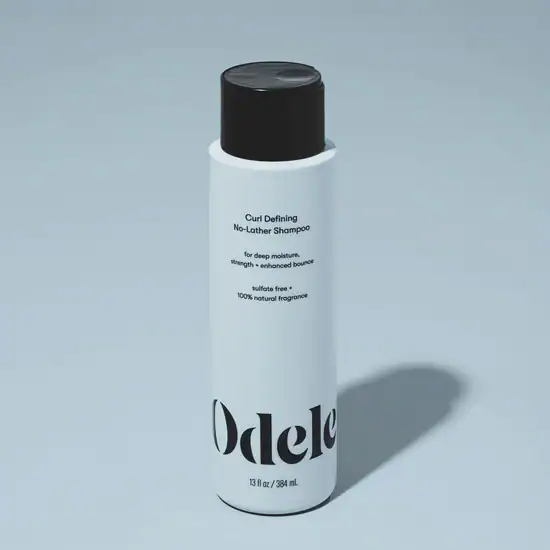
Odele Curl Defining No-Lather Shampoo
Best For: Curls prone to dryness or tangling during detox
Best Season: Winter or anytime you need extra moisture and minimal stripping
Why It’s Good: This gentle, creamy formula skips harsh foaming agents and instead cleanses with mild surfactants and plant oils. It’s perfect for curls rebelling against traditional cleansers during the transition period. Retains slip and softness.
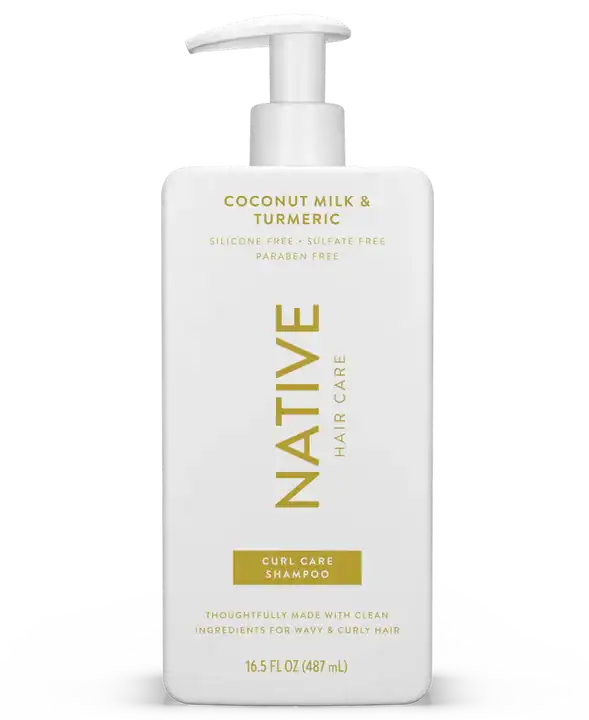
Native Curl Care Shampoo
Best For: Budget-friendly everyday shampooing post-detox
Best Season: Spring and summer
Why It’s Good: A clean, vegan, and coconut-derived formula that helps restore softness without buildup. It balances scalp oils, lightly hydrates, and adds shine, great for maintenance once your scalp’s oil production normalizes. Subtle tropical scent and under $12.
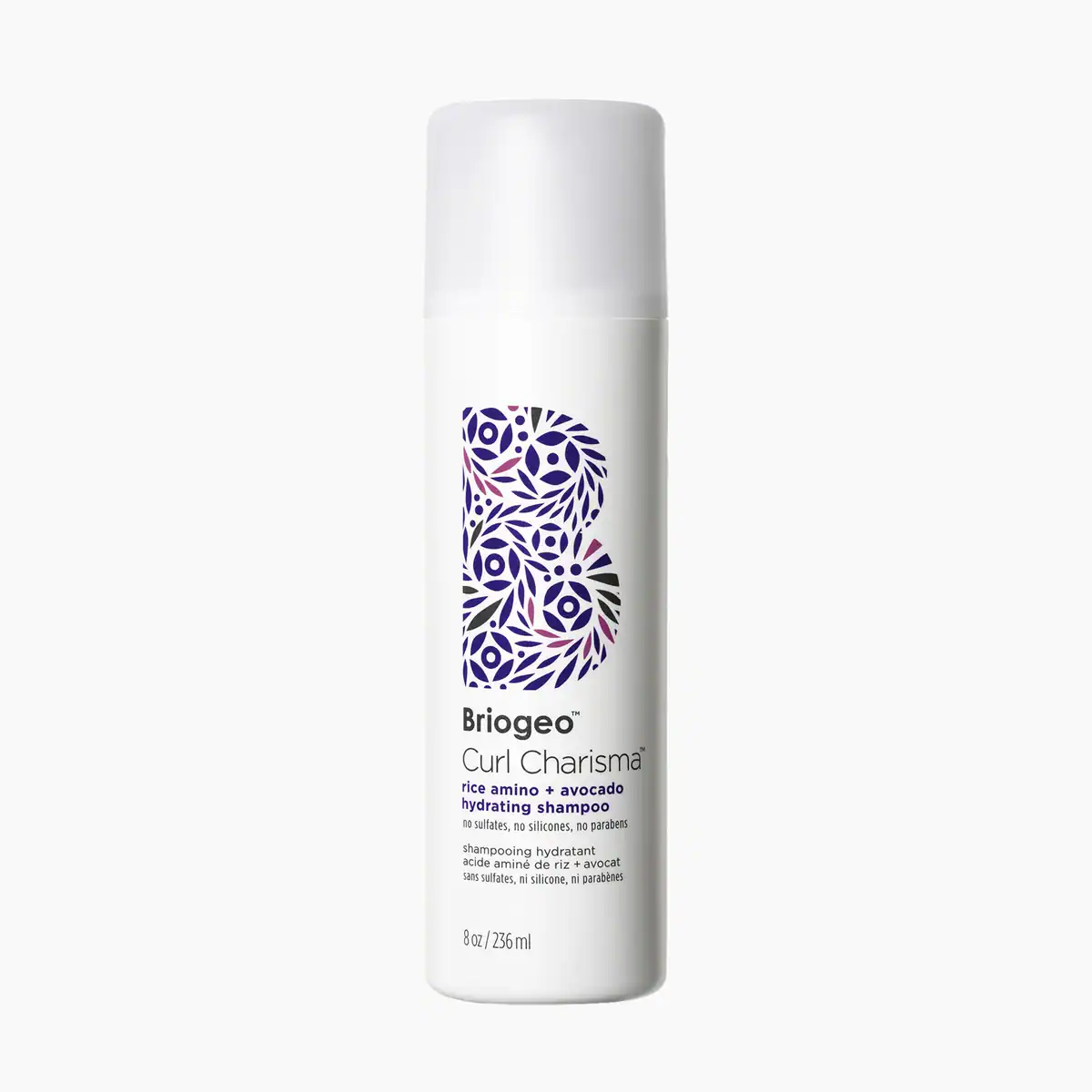
Briogeo Curl Charisma Hydrating Shampoo
Best For: Medium-to-thick curls needing moisture + definition
Best Season: Fall or winter when dryness peaks
Why It’s Good: Rich in shea butter and rice amino acids, this clean shampoo deeply hydrates without flattening curls. Perfect for maintaining definition post-detox.
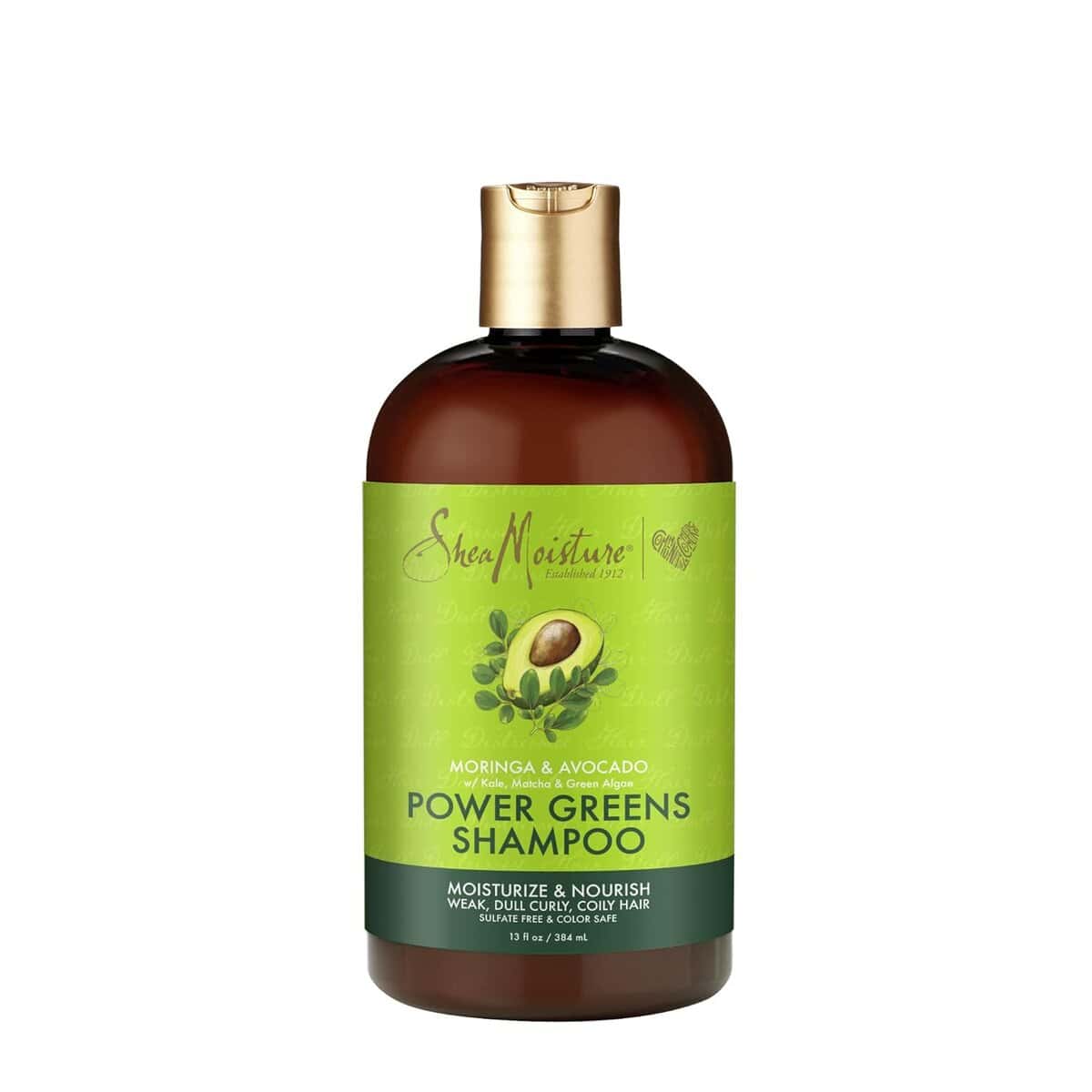
SheaMoisture Moringa & Avocado Power Greens Shampoo (Budget Option)
Best For: Low-porosity curls or those on a budget
Best Season: Winter or when hair feels dry
Why It’s Good: Packed with moringa, kale, and avocado extracts for moisture and softness. It’s a rich formula that helps calm frizz while keeping curls hydrated during transition.
How to Rotate Products During a Curly Hair Detox
Not every curly head can, or should, wash on the same schedule. Your porosity, curl type, and scalp condition determine how often you should clarify, co-wash, or cleanse. Think of your products as tools, not a checklist. The goal isn’t to buy them all, but to understand what role each one plays so you can build a simple rotation that matches your curls.
If You Have Low Porosity Hair
Tends to: Repel moisture, get buildup easily, feel coated or waxy during detox
Wash Frequency: Once every 5–7 days
Rotation Example:
- Clarify with OUAI Detox Shampoo every 10–14 days
- Gentle Cleanse with Native Curl Care Shampoo on your main wash day
- Co-Wash or Refresh mid-week only if needed
Tip: Stick to lightweight conditioners and always rinse with warm (not hot) water to help lift buildup.
If You Have Medium Porosity Hair
Tends to: Absorb moisture well but lose it quickly; gets frizzy during detox
Wash Frequency: Every 4–6 days
Rotation Example:
- Clarify once a week (alternate between OUAI or Odele Curl Defining)
- Moisturize with Briogeo Curl Charisma or Prose Custom Curl Shampoo
- Co-Wash mid-week if curls lose bounce
Tip: Deep-condition weekly. You’ll see faster recovery once your scalp finishes recalibrating oil production.

If You Have High Porosity or Damaged Hair
Tends to: Soak up products fast but lose hydration; easily dry and frizz during detox
Wash Frequency: Once or twice a week max
Rotation Example:
- Clarify lightly every 2 weeks with OUAI or Pacifica Rosemary Purify
- Hydrating Cleanse weekly with Briogeo Curl Charisma or Odele
- Skip Co-Wash unless your scalp feels dry, focus on sealing moisture instead
Tip: Always follow clarifying days with a deep mask and cold-water rinse to seal cuticles.
Transition Planner Mindset
- Think “reset, replenish, rebalance” not “wash more.”
- If your scalp gets flaky fast, bump up clarifying days.
- If your curls feel rough or stretched, scale back cleansing and focus on hydration.
- Stick to the same rotation for at least 4 weeks before adjusting.
Maintaining Healthy Curls After the Switch
- Stick with clean, silicone-free stylers that complement your shampoo routine.
- Limit heavy oils during detox, they can trap buildup.
- Protect hair at night with a satin bonnet or pillowcase (you already have both, gold star!).
- Re-evaluate every 4–6 months; your curl needs change with weather and porosity shifts.
FAQs: Transitioning to Natural Shampoo
How do I survive the natural shampoo transition?
Focus on hydration and patience. Deep condition weekly, use a clarifying rinse once every two weeks, and avoid introducing too many new products at once. Give your scalp 2–4 weeks to adjust.
How long does it take hair to detox from regular shampoo?
Most people notice changes within 3–4 weeks, but it can take up to 8 weeks depending on buildup and porosity. Low-porosity hair tends to take longer to rebalance oil and moisture levels.
What to expect when switching to sulfate-free shampoo for curly hair?
Expect temporary frizz, dryness, or limp curls. Once your scalp normalizes its oil production, your natural curl pattern and bounce return.
How can I avoid frizz when transitioning?
Use a microfiber towel, apply a lightweight leave-in on damp hair, and avoid brushing curls dry. A consistent moisture routine is your best defense.
Can I go back to regular shampoo if I hate the results?
You can, but it’s usually unnecessary. The detox stage is temporary. If your hair feels too dry, adjust your conditioner and deep treatment frequency before reverting.
Final Thoughts
Switching to a natural shampoo can feel like your curls have betrayed you but really, they’re learning to thrive again. The frizz, flakes, and limp texture are just signs of your scalp adjusting after years of buildup and coating.
Give it time, stay consistent, and choose shampoos that fit your curls and budget. Your hair’s natural texture will reemerge softer, shinier, and genuinely healthy, no filters required.
Related Articles You’ll Love
If you found this guide helpful, check out these next
- Best Natural Shampoos for Curly and Wavy Hair clean, curl-safe picks that actually hydrate.
- Hard Water and Curly Hair: Rescue Routine spot mineral buildup and protect your curls.
- Curly Hair Resource Guide a hub of routines, product recs, and troubleshooting for every curl type.
Let’s Make Inbox Magic
Join my circle to unlock the Curly Mama Freebie Library, your all-access pass to printables, checklists, and resources made for busy moms and curly hair lovers.
Already subscribed? Click here to access the Freebie Library.