
How to Save Money on Groceries: Budget Grocery List Tips
Disclaimer: This post contains affiliate links. I earn a small commission when you click on them, at no extra cost to you. All opinions expressed are my own.
The global economy has faced ongoing instability over the past five years, marked by pandemic-related shutdowns, inflation spikes, supply chain disruptions, and international conflicts. When we think we’re recovering from one issue, another pops up. Regardless of your situation, one thing we all need is food on the table. Whether you live alone or are caring for a growing family, these practical tips can help you cut down your monthly grocery bill without sacrificing nutrition or comfort.
It only takes 21 days to build a habit, and many of these are so simple, you’ll naturally start making smarter swaps in no time.
Start with a Clean Slate: Why Washing Dishes First Saves Money
Not what you expected, right? But having clean dishes is one of the first steps to avoiding takeout. Let’s be honest, no one wants to cook in a messy kitchen. That’s how you end up reaching for DoorDash or driving to the nearest fast food spot.

What happens next? Your groceries sit untouched in the fridge, slowly going bad. That’s money wasted on spoiled food, gas, and more takeout.
Here’s something wild: 30–40% of the U.S. food supply goes to waste, according to the USDA. Cluttered and disorganized kitchens are a significant contributor to this waste, leading to forgotten leftovers, double purchases, and the “I’ll deal with it later” cycle.
Studies have even shown that clean, tidy kitchens make people more likely to cook at home. When your counters are clear and your dishes are washed, it’s easier to feel motivated to use the food you have instead of ordering out.
Taking just 10 minutes to clean dishes each night can reset your kitchen, save you money, and help you regain control of your meals.
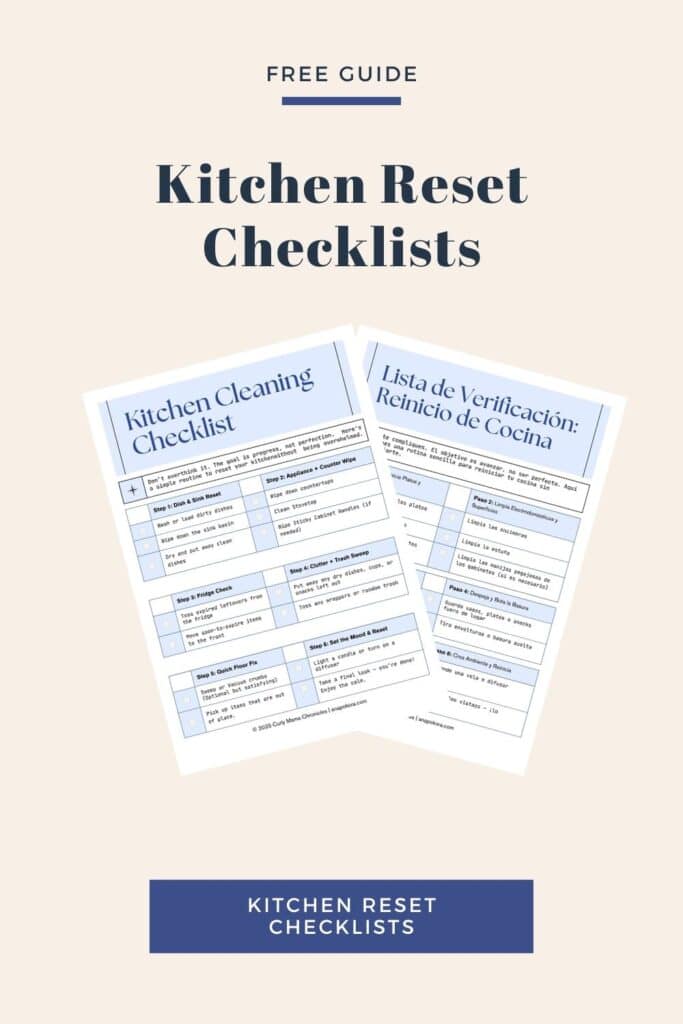
Want a Kitchen Reset Checklist to make cleaning easier?
Get it in English and Spanish inside the Freebie Library when you join my email list. It’s an easy routine to help you stay on top of the mess without overthinking it.
Reorganize Your Kitchen to Avoid Buying Duplicates
One of my favorite lessons from The Life-Changing Magic of Tidying Up by Marie Kondo is this: if it doesn’t bring you joy, you don’t need to keep it.

That “Pinterest-perfect” kitchen with champagne flutes, salad forks, and endless mugs? You don’t need all that. If you live alone, one spoon, one fork, and one table knife will do just fine for daily use.
The more dishes you have available, the more you’ll pile up in the sink. It is also essential to clean as you go, as this will prevent clutter.
If you like to host occasionally, consider keeping a small set of extra utensils tucked away in a bin or drawer, rather than leaving them out in your everyday space. If your kitchen is overflowing, it might be time to donate extras to Goodwill or sell them on Facebook Marketplace to make some space (and a few dollars).
Make a Budget Grocery List and Menu Plan
Meal planning doesn’t have to be overwhelming. One thing that has helped our household is creating a homemade “restaurant-style” menu with meals that both my husband and I enjoy. He’s a pickier eater than I am, so having a visual list helps us decide what we’re in the mood for and build our shopping list around that.
This trick made us realize how often we were shopping for just 2–3 days of food instead of the whole week. Now we’re wasting less, cooking more, and sticking to our budget without having to guess what to eat each night.
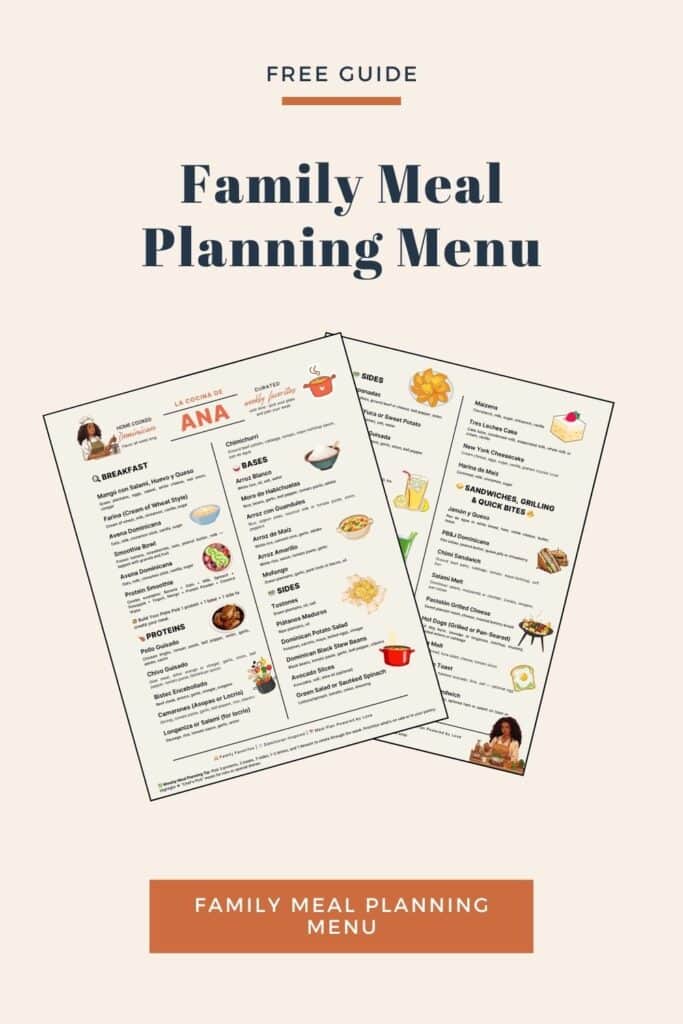
Want to try this with your meals?
I’ve created a Weekly Menu and Shopping List Printable that you can use as a guide or customize in Canva. You’ll find it inside the Freebie Library when you join my email list.
Want to make it your own?
Click here to customize this template in Canva. Just make sure you’re logged into Canva before clicking, it’ll prompt you to create your own copy.
Don’t Waste Food: Check Expiration Dates Often
Before you head to checkout, take a few seconds to check the expiration dates on your groceries, especially those of dairy and meat products. Some of my biggest shopping mistakes happened when I was in a rush and didn’t double-check. I’ve brought home expired yogurt more than once just because I wanted to get in and out quickly.
Here’s the truth: many stores are understaffed, and it shows. When retail locations fail to meet sales goals, they often reduce employee hours or eliminate positions. That means fewer hands on the floor to rotate stock, clean fridges, or pull expired items.
If you’ve never worked retail, know this: when a store is short-staffed, employees are doing multiple jobs at once. In those moments, checking milk dates is the last thing on anyone’s mind. Add to that the “that’s not my job” culture some workers adopt to survive burnout, and it’s easy to see how expired items end up on the shelf.
Tip: If you use curbside pickup, leave a note asking them to double-check expiration dates on dairy, deli, and meat items. It only takes a moment, and can save you from wasting money later.
Use Store Apps to Score Weekly Grocery Deals
Weekly specials are a goldmine, but you’ve got to be smart about them. Meat, deli products, and dairy are often the first items marked down, usually because they’re approaching their expiration dates.
Before you toss that sale pack of chicken into your cart, check the “sell by” date. You might only have 1–2 days to cook it. If you don’t plan to use it right away, freeze it as soon as you get home.
I live in Texas, where H-E-B is the go-to grocery chain, and they offer incredible weekly deals. I always check their app first to see what snacks or pantry staples are discounted before finalizing my meal plan.
Use Store Apps to Plan and Avoid Impulse Buys
Most store apps (H-E-B, Walmart, Kroger, etc.) have a “shopping list” feature that organizes your items by section or aisle. This makes in-store trips faster; no wandering around wondering where the salsa or oat milk is.
If a product isn’t on the shelf, some apps even show you a store map or real-time stock update. Keep in mind that if the store has recently conducted an inventory, the app may be slightly out of sync; however, it’s still a great starting point to save time and avoid impulse buys.
Buy What’s in Season to Save on Produce
Out-of-season produce tends to be more expensive because it must be shipped in from other regions or countries, often losing freshness and flavor during transit.
If strawberries aren’t in season where you live, the price will usually be higher to offset transport and storage costs. A simple swap? Go with frozen strawberries for smoothies. They’re usually picked at peak ripeness, and they last much longer.
The bonus? When you shop seasonally, you’re not just saving money, you’re getting fresher, more nutritious food.
Not sure what’s in season where you live?
Check out Seasonal Food Guide — just choose your state and month to see what produce is freshest (and cheapest) near you.
Swap Ingredients You Already Have
As a Dominican who moved from New York City to Texas, I know the struggle of finding familiar ingredients at a local grocery store. In NYC, I had easy access to Dominican staples, such as yuca, culantro, queso frito, and sazón. In Texas? Not so much.
Here are some examples:
- Can’t find aji gustoso? Try mixing mini sweet peppers and green bell peppers.
- No culantro? A blend of cilantro and spinach gives a similar taste.
- Missing queso frito? Try halloumi or paneer — both fry up beautifully.
Swapping ingredients isn’t about making the dish perfect; it’s about keeping the tradition alive while adapting it to your surroundings.
Not sure what to use instead? FoodSubs.com has a huge list of ingredient alternatives, including cultural ingredients that aren’t always stocked at big chain stores.
Store Fruits and Veggies the Right Way
Once produce leaves the store’s refrigerated sections, its shelf life depends on how you store it at home. The supermarket has controlled temperatures, humidity, and airflow; your home kitchen probably doesn’t.
Start by paying attention to how the store stores it:
- If it were in a fridge, keep it in yours.
- If it was on a shelf, it’s likely shelf-stable — at least for a few days.
More helpful tips:
- Wrap leafy greens in paper towels and place them in airtight containers or produce drawers.
- Store herbs like fresh cilantro and parsley in a jar filled with water (similar to a bouquet) inside your fridge.
- Keep ethylene-producing fruits, such as bananas and avocados, away from other produce to prevent early ripening.
- Wash berries in a vinegar-water solution (1:3 ratio), then dry them thoroughly. Store them in a container lined with paper towels to prevent mold growth.
Want to check how long something actually lasts?
StillTasty.com lets you search by ingredient and shows how to store it for the longest shelf life: fridge, freezer, or pantry.
What to Buy in Bulk (And What to Skip)
Costco and Sam’s Club are great, but only if you’re smart about what you buy. Not everything needs to come in a 10-pound bag or a 2-gallon jug. I’ve personally wasted money buying things in bulk that we didn’t eat fast enough, primarily produce and random sauces.
Bulk buying is best for:
- Pantry staples: rice, oats, pasta, beans, flour, sugar
- Freezer-safe items: meats, cheese blocks, frozen fruits, and veggies
- Household goods: toilet paper, diapers, detergent, paper towels
Skip bulk items if:
- They’re perishable and won’t freeze well
- You’ve never tried the product before
You only use them occasionally
These days, I keep a separate list of what to buy in bulk and what to leave for my regular grocery runs, and it’s made a huge difference in reducing waste.
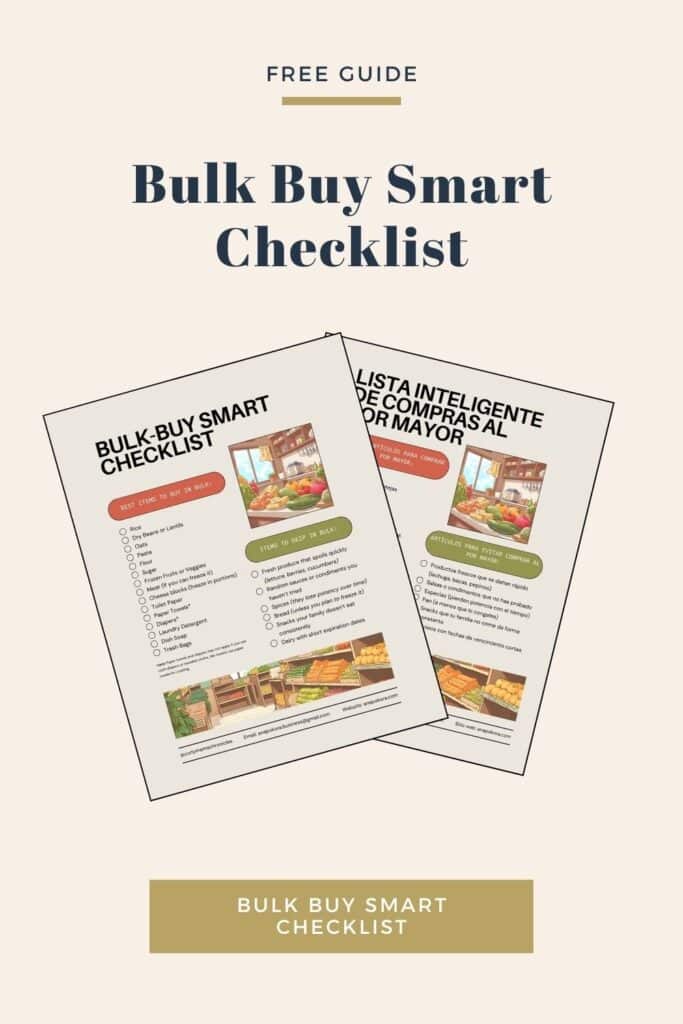
Stop Overbuying: Grab My Bulk Shopping Checklist
Get it in English and Spanish inside the Freebie Library when you join my email list. It’s a simple way to stay on top of things without making it harder than it needs to be.
Ditch Bottled Water: Save with Refillable Jugs
I used to buy bottled water every month until a friend suggested switching to 5-gallon refillable water jugs. I now pay just $1.80 to refill at Walmart, and it’s been a significant money saver. All I needed was a one-time investment in two 5-gallon jugs and an affordable electric water dispenser (no bulky system required).
If you live in a hard-water state and frequently rely on bottled water, this is a budget-friendly solution, especially for apartment living. Hard water can damage your hair and appliances. Here’s how I manage it.
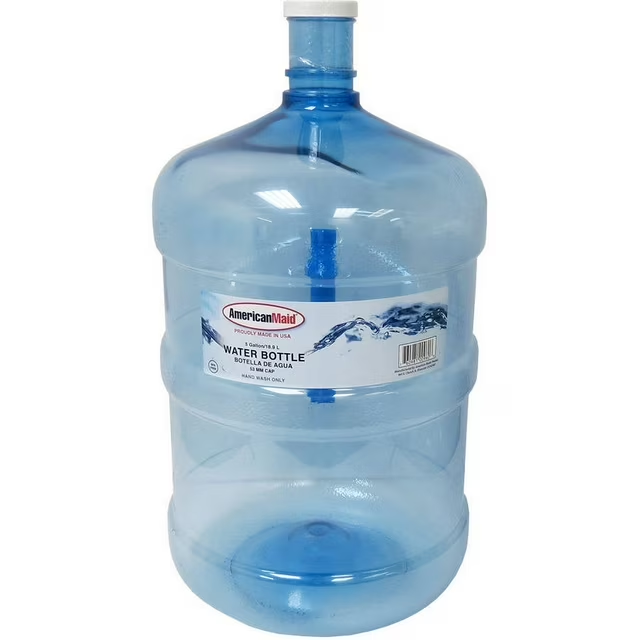
American Maid 5 gal Water Bottle
Skip the weekly bottled water runs. This sturdy, reusable jug holds up to 5 gallons and can be refilled at Walmart for under $2. Great for cutting costs and reducing waste, especially in hard water areas.
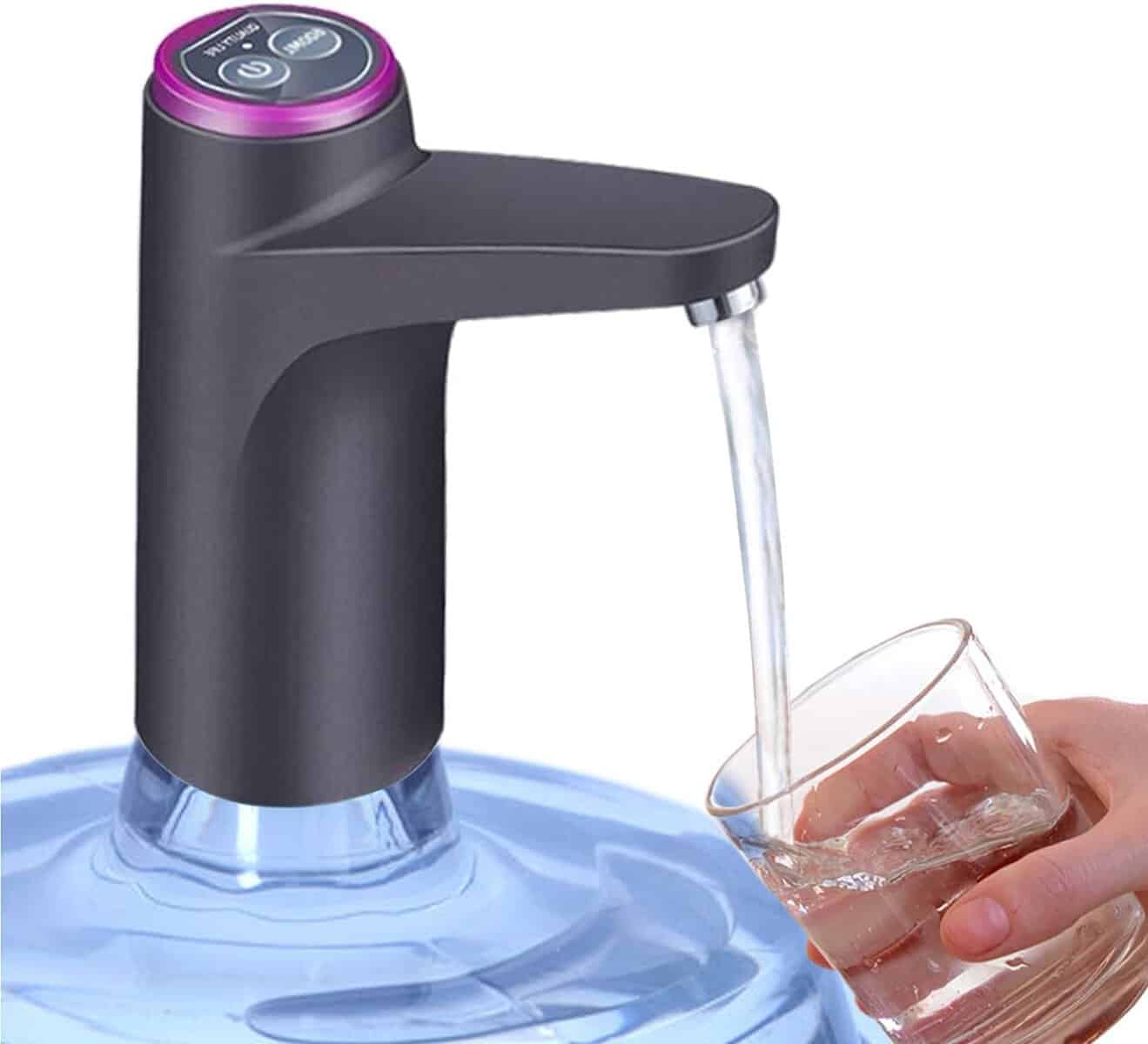
Cozy BlueWater Dispenser
No need for a full water system, this compact electric dispenser fits right on your 5-gallon jug and dispenses water with the push of a button. A budget-friendly and renter-friendly way to stay hydrated.
Make Room in Your Grocery Budget: Brew Coffee at Home
Grabbing Starbucks or Dunkin every day may not feel expensive, but those $5+ drinks add up quickly. That money could easily go toward a few days’ worth of groceries.
My husband and I made the switch to an affordable espresso machine at home, and it’s been a game-changer. I can make lattes, iced coffees, and even frappes whenever I want, no long lines and no unnecessary spending on coffee.
Pro Tip: Set a weekly coffee budget. If you still want the occasional treat, limit it to once a week and brew at home the rest of the time.
Want to upgrade your setup? Here’s the espresso machine we use — affordable, easy to clean, and makes strong coffee.
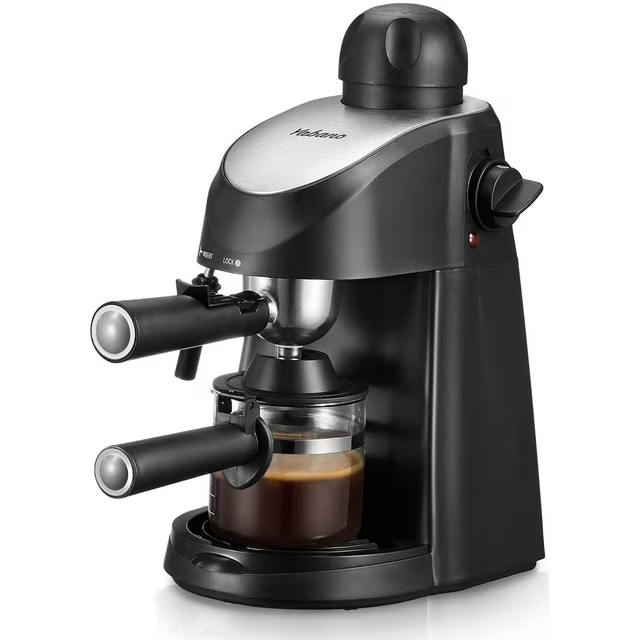
Yabano Espresso Machine
We’ve had this espresso machine for almost a year now with no issues and it’s been totally worth it. It’s compact, easy to use, and comes with a milk frother so you can whip up lattes, iced coffee, or frappes from home. No more expensive coffee runs just savings and convenience.
Watch for Store Deals and Cashback Opportunities
Stores like Dollar General are known for weekly deals — especially the popular “$5 Off $25” Saturday coupon, which you can stack with manufacturer or store coupons for even bigger savings. You can find breakdowns of upcoming deal combos by following the #dollargeneralcoupons hashtag or joining Facebook groups filled with digital couponers who share their weekly hauls and matchups.
Apps like The Crazy Coupon Lady, Flipp, and Coupons.com help you keep track of digital coupons without cutting anything. But here’s the golden rule: only clip what you will use. A good deal isn’t a good deal if it ends up sitting in your pantry untouched.
Don’t stop at coupons — cashback apps can stack savings on top of sales. Use apps like:
- Ibotta
- Fetch
- Rakuten
- Receipt Hog
- Shopkick
…to get rebates on groceries, toiletries, and even household supplies.
I break down how each app works (and which ones I use) in my article:
Top 7 Cashback Apps for Everyday Shopping
FAQ: Grocery Shopping on a Budget
What are the best ways to save money on groceries?
Meal planning, buying seasonal produce, using store apps, and shopping with a list are all great ways to reduce grocery costs.
Is buying in bulk cheaper?
It depends—items like rice, beans, and paper goods typically offer savings when purchased in bulk. Avoid bulk for things that expire quickly.
How do refillable water jugs save money?
Instead of buying bottled water weekly, you can refill 5-gallon jugs for a fraction of the price, which is especially helpful in areas with hard water.
Are grocery store apps worth using?
Absolutely. They help you spot weekly deals, clip digital coupons, and plan your trips to avoid impulse buys.
Final Thoughts
Saving money on groceries doesn’t have to mean cutting corners—it just takes a little planning and creativity. These tips have helped me stretch our grocery budget without sacrificing meals we enjoy. Whether you’re shopping for a family or just yourself, start small and build your habits over time.
Got a money-saving grocery hack? Share it in the comments!
Let’s Make Inbox Magic
Join my circle to unlock the Curly Mama Freebie Library, your all-access pass to printables, checklists, and resources made for busy moms and curly hair lovers.
Already subscribed? Click here to access the Freebie Library.
Already subscribed? Click here to access the Freebie Library.