2A 2B 2C Hair Routine: How to Build a Lightweight Routine for Wavy Hair
This post may contain affiliate links, which means I may earn a small commission if you make a purchase through them at no extra cost to you. All opinions are my own. See my full disclosure here.
Wavy hair can look effortless, but without the right routine, it can quickly fall flat, frizz up, or lose definition halfway through the day. If you’ve ever wondered whether your hair is 2A, 2B, or 2C, or struggled to keep your waves defined without weighing them down, this guide will clear things up.
What Is Type 2 Wavy Hair?
Type 2 hair sits between straight and curly. Instead of tight ringlets, it forms soft S-shaped waves that can range from barely there to almost curly.
Wavy hair typically:
- Lacks the natural moisture retention of curls
- Gets weighed down easily
- Reacts strongly to product buildup and humidity
That’s why Type 2 routines rely on lightweight hydration and flexible hold, rather than heavy creams or butters.
How Type 2 Fits on the Curly Hair Chart
On the curly hair chart, Type 2 waves sit between straight hair (Type 1) and curly hair (Type 3).
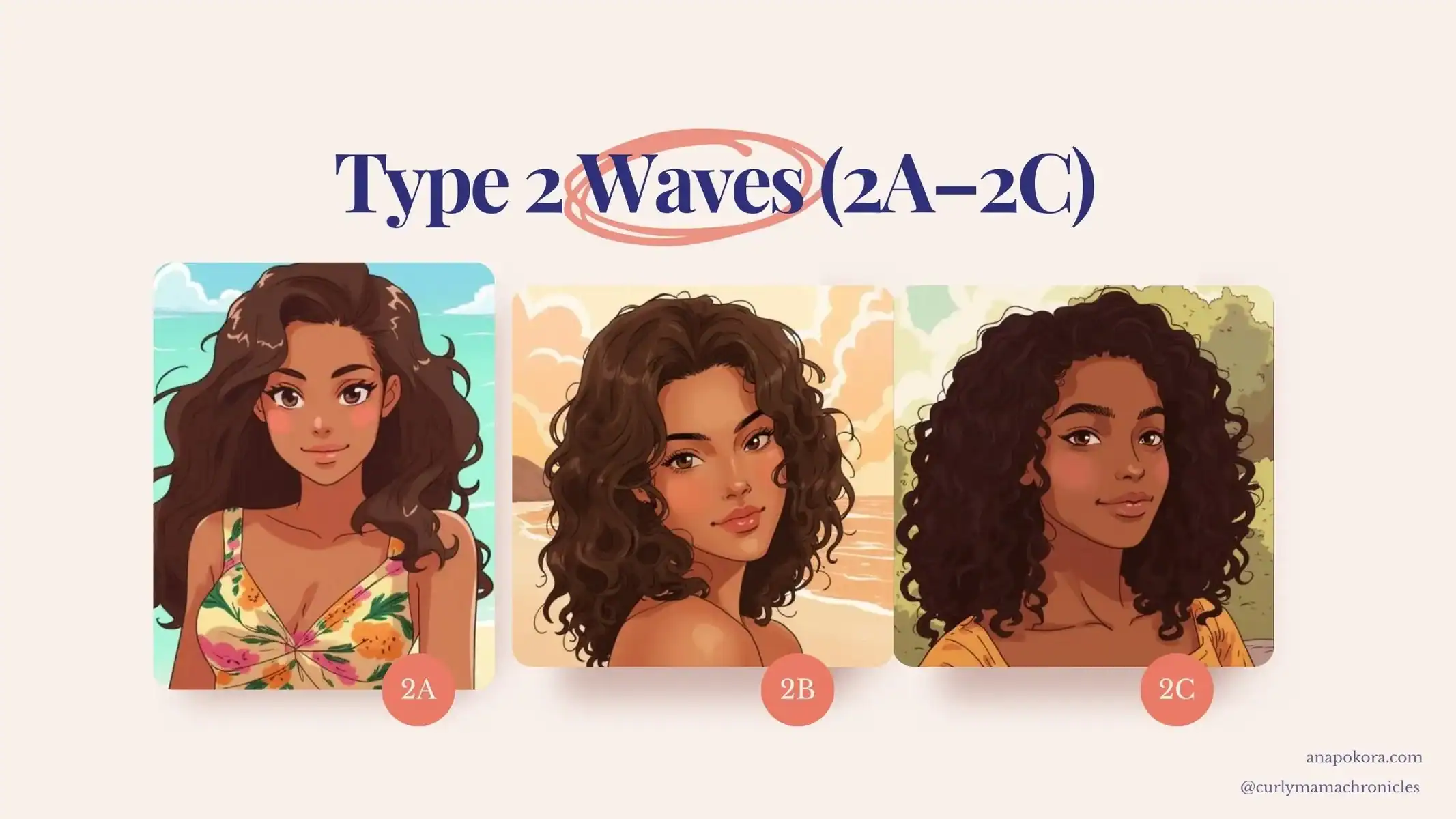
The Type 2 range includes:
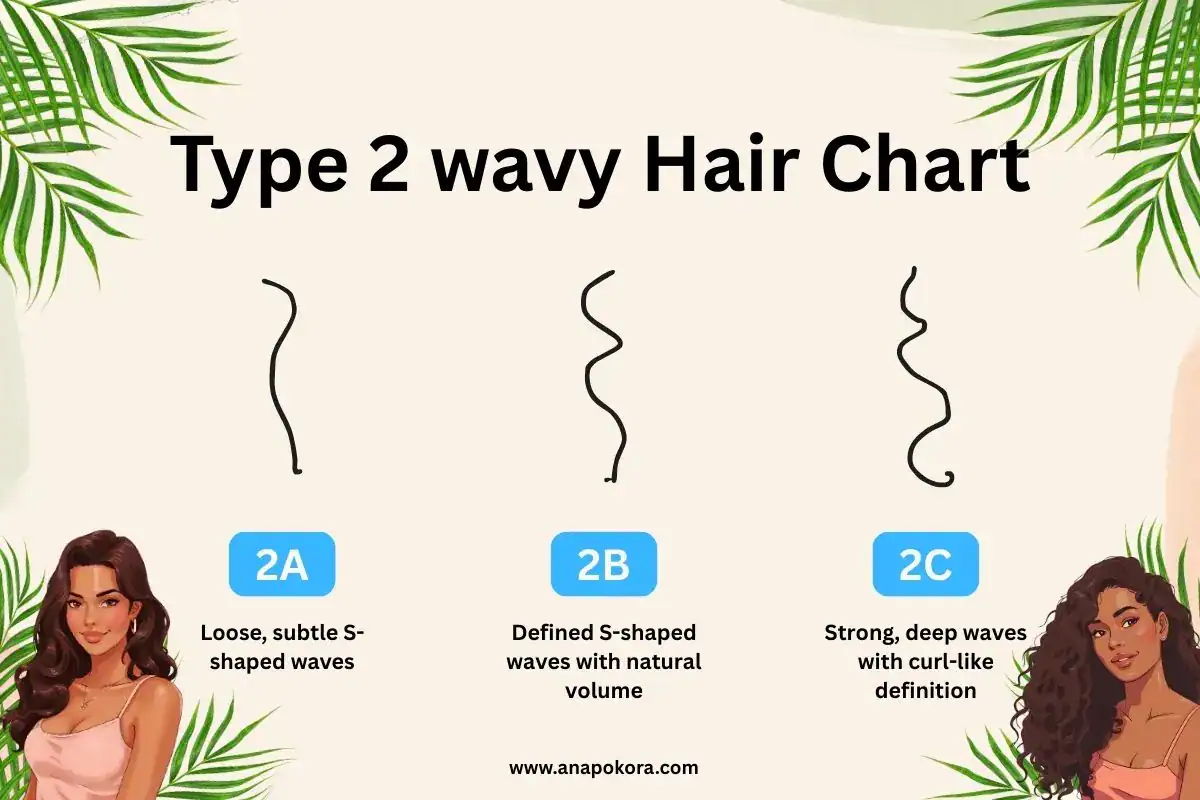
- 2A: loose, subtle waves
- 2B: more defined S-shapes with frizz potential
- 2C: strong waves that border on loose curls
If you see multiple patterns on your head, that’s completely normal. Most people are a blend.
The Difference Between 2A, 2B & 2C at a Glance
- 2A – Loose, barely-there waves with minimal frizz
- 2B – Defined S-shaped waves, prone to frizz and flat roots
- 2C – Thick, strong waves with more volume and curl tendency
Wave pattern, density, and porosity all influence how your hair behaves.
Quick Guide to 2A, 2B, and 2C Waves

2A Hair – Loose, Lightweight Waves
2A waves are subtle and fine, often falling flat without styling. They benefit most from volume-focused products and minimal layering.
2B Hair – Defined Waves With Frizz Potential
2B waves have a clearer shape but are prone to frizz, especially at the crown. They do best with light leave-ins and flexible hold.
2C Hair – Strong Waves That Border on Curls
2C waves are fuller and more textured, often mistaken for loose curls. They need slightly richer moisture than 2A/2B—but still lighter than Type 3 routines.
Common Challenges of Wavy Hair
- Waves falling flat throughout the day
- Frizz and puffiness in humidity
- Products weighing hair down
- Lack of volume at the roots
- Inconsistent definition from wash to wash
Most of these issues come from using products that are too heavy or layering incorrectly.
Transitioning Tips for Type 2 Hair
If you’re transitioning from frequent heat styling, over-brushing, or heavy products, your waves may feel inconsistent at first.
Detoxing From Buildup

Switch to a gentle, sulfate-free cleanser and clarify once every few weeks to remove residue that hides your natural wave pattern.
Finding the Right Moisture Balance
Wavy hair needs moisture, but too much can cause limpness. Stick to lightweight conditioners and avoid daily heavy masks.
Protective Night Routines
Sleep on a satin pillowcase or loosely pineapple your hair to prevent overnight frizz and flattening.
Patience During the Adjustment Phase
As the buildup clears and the heat damage grows out, your waves may appear uneven. This is normal. Consistency matters more than perfection.
2A 2B 2C Hair Routine: Step-by-Step Guide
Cleansing + Conditioning Basics
Wash 2–3 times per week with a gentle shampoo. Condition lightly, focusing on the mid-lengths and ends, then rinse thoroughly.
Lightweight vs. Heavy Products
- 2A: sprays, foams, light gels
- 2B: leave-in sprays, mousses, flexible gels
- 2C: light creams layered under gel (sparingly)
Fine density = lighter formulas
High density = slightly more layering
Styling for Definition & Frizz Control
Apply stylers to soaking wet hair, use praying hands, then scrunch upward. Air-dry or diffuse on low heat. Avoid touching while drying.
Recommended Wash & Go Kits for Type 2 Waves
2A Waves – Lightweight & Voluminous
Porosity breakdown:
- Low: clarifying shampoo monthly, light conditioner, mousse
- Medium: gentle shampoo, spray leave-in, foam or gel
- High: hydrating conditioner, leave-in spray, light gel

Skip oils and butters—they flatten waves quickly.
2B Waves – Balanced Definition
Porosity breakdown:
- Low: lightweight shampoo, leave-in spray, gel
- Medium: hydrating shampoo + conditioner, mousse + gel
- High: richer conditioner, leave-in with slip, gel
Avoid heavy creams daily—they cause buildup fast.
2C Waves – Strong Waves With Hold
Porosity breakdown:
- Low: lightweight cleanser, conditioner with slip, light cream + gel
- Medium: moisturizing shampoo, richer conditioner, cream + gel
- High: co-wash or rich shampoo, deep conditioner weekly, cream + gel
Skip mousse as a main styler—it usually isn’t enough.
FAQs About 2A 2B 2C Hair
Can your wave pattern change over time?
Yes. Heat damage, buildup, hormones, and product choice can all affect how visible your waves are. With the right routine, many waves become more defined.
How do I know if my hair is 2A, 2B, or 2C?
Check your hair when it’s clean, product-free, and air-dried: 2A = subtle waves, 2B = visible S-shapes, 2C = thick waves bordering on curls. Most people have a mix.
Do I need different products for low vs. high-porosity waves?
Yes. Low-porosity waves need lighter products and clarifying. High-porosity waves need more conditioning but are still lightweight.
What’s the best routine if my waves fall flat?
Clarify buildup, reduce product weight, style on soaking wet hair, and focus on root lift.
Can wavy hair become curlier?
Sometimes. Many people with 2B–2C hair see curl formation once they stop weighing their hair down or using heat.
Final Thoughts
Type 2 wavy hair can be subtle or bold, loose or full—but it all thrives on the same foundation: lightweight moisture, thoughtful styling, and consistency. Whether you lean more 2A, 2B, or 2C, understanding how your waves behave makes it much easier to build a routine that actually lasts throughout the day.
If you’re still figuring out where your hair fits or want to explore routines beyond just wave type, my Curly Hair Resource Guide is a great place to start. It breaks down curl patterns, porosity, density, and common mistakes so you can make informed choices rather than guess.
For those who feel stuck between categories, especially if your hair sits somewhere between deep waves and loose curls, you may also find my 2C vs 3A Hair Guide helpful. It walks through the key differences and care needs when your texture doesn’t fit neatly into one box.
And if your waves are on the finer side and tend to fall flat easily, don’t miss my Fine Wavy Hair Styling Routine, where I share techniques and product logic specifically for maintaining volume and definition without buildup.
Ultimately, curl type is just one piece of the puzzle. When you combine it with porosity, density, and the right styling approach, your waves can finally do what they’re meant to do—move, bounce, and last.
Let’s Make Inbox Magic
Join my circle to unlock the Curly Mama Freebie Library, your all-access pass to printables, checklists, and resources made for busy moms and curly hair lovers.
Already subscribed? Click here to access the Freebie Library.